You go to the dentist with a toothache. They take an X-ray, look at the image, and then start talking about a possible root canal.
So, can a dentist actually tell if you need a root canal just from an X-ray?
Not always.
Dental X-rays can provide important clues about what is happening around a tooth. However, an X-ray is usually only one part of the diagnosis. Your symptoms, dental history, examination, and additional testing can all help determine whether root canal treatment is necessary.
At Eastern Idaho Endodontics, diagnosing the source of tooth pain is an important part of what we do. Before recommending treatment, we want to understand what is actually happening inside and around your tooth.
What Can a Dental X-Ray Show?
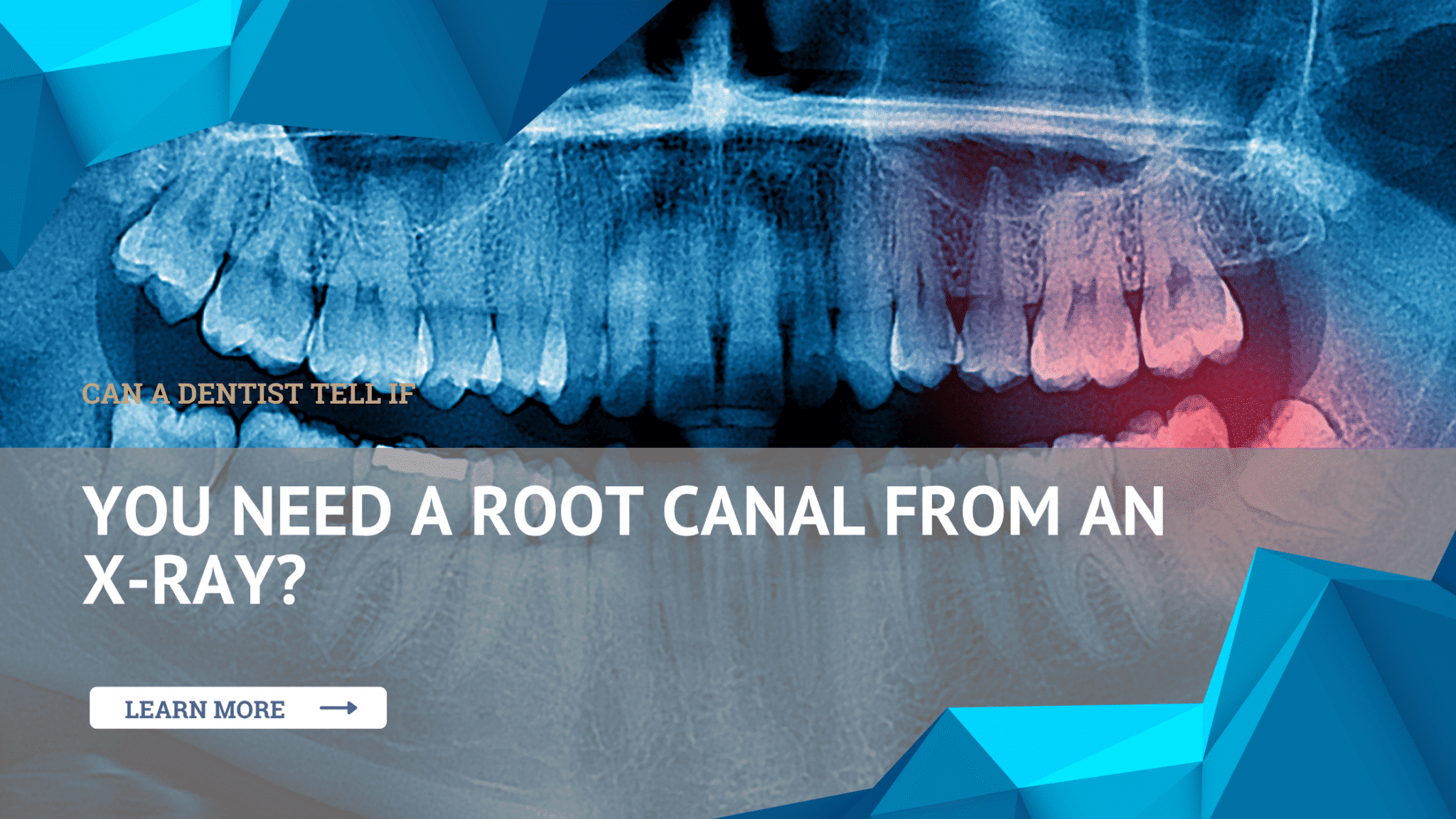
Dental X-rays allow dentists and endodontists to see areas that aren’t visible during a regular examination.
They may reveal:
- Deep tooth decay
- Changes in the bone around a tooth’s root
- Previous root canal treatment
- Large fillings or restorations
- Changes around the tip of a root
- Certain fractures or other structural concerns
- Problems developing beneath a crown
These findings can provide valuable information. However, your dentist or endodontist will also consider other factors before making a diagnosis.
A tooth can hurt even when a standard X-ray does not show an obvious problem. Likewise, an unusual finding on an X-ray does not automatically mean you need a root canal.
Can an X-Ray Show a Tooth Infection?
Sometimes.
When an infection affects the bone around a tooth’s root, an X-ray may reveal changes. For example, your dentist may notice a darker area near the tip of the root.
However, timing matters.
In some cases, symptoms can begin before a standard dental X-ray clearly shows any changes. That means a patient can have significant tooth pain even though the image does not show an obvious infection.
This is one reason dentists and endodontists consider more than the X-ray when making a diagnosis.
Can You Need a Root Canal If Your X-Ray Looks Normal?
Yes.
A normal-looking X-ray does not always rule out a problem inside the tooth.
The soft tissue inside your tooth is called the dental pulp. It contains nerves, blood vessels, and connective tissue. If the pulp becomes inflamed or damaged, you may experience symptoms before there are noticeable changes in the surrounding bone.
For example, you may have:
- Lingering sensitivity to hot or cold
- Sharp pain when biting
- Spontaneous tooth pain
- Pain that wakes you up at night
- Symptoms that come and go
This is especially important with tooth pain that comes and goes, because intermittent symptoms can still indicate a problem that deserves further evaluation.
How Does an Endodontist Determine If You Need a Root Canal?
Think of the X-ray as one piece of a puzzle.
To determine whether a tooth needs root canal treatment, an endodontist may combine several pieces of information.
Your Symptoms
We want to know what the pain feels like and when it happens.
Is it sharp or dull? Does cold trigger it? Pain continue after you stop drinking something cold? Hurt when you chew? Tooth ache without any obvious trigger?
Those details matter.
Your Dental History
Previous dental work can also provide clues.
A tooth with a large filling, crown, previous injury, or repeated dental procedures may behave differently than a tooth that has never been treated.
We may also ask when the symptoms began and whether they have changed.
A Clinical Examination
The tooth and surrounding gums are examined for signs of swelling, tenderness, cracks, discoloration, or other concerns.
Nearby teeth may also be checked because dental pain can sometimes be difficult to pinpoint.
Diagnostic Testing
Different tests can help us understand how the pulp and tissues around the tooth are responding.
Depending on the situation, an endodontist may evaluate how the tooth responds to temperature, biting pressure, tapping, or other diagnostic tests.
The results are then considered alongside your symptoms and dental images.
Can a Dentist Tell From a Cold Test If You Need a Root Canal?
Cold testing can provide useful information about the health of the dental pulp.
A healthy tooth typically responds to cold for a short period and then returns to normal. A tooth with an inflamed pulp may respond differently.
For example, the sensation may be unusually intense or continue after the cold stimulus has been removed.
However, one test alone does not usually determine the diagnosis.
The response needs to be compared with your symptoms, nearby teeth, examination findings, and imaging.
Why Would My Dentist Refer Me to an Endodontist?
Sometimes the diagnosis is straightforward. Other times, tooth pain can be surprisingly complicated.
Your dentist may recommend seeing an endodontist when:
- The source of your tooth pain is unclear
- Your symptoms do not match the X-ray findings
- A crack is suspected
- You have severe or lingering sensitivity
- The tooth hurts when biting
- You have had previous root canal treatment
- A root canal may be necessary
- The tooth has experienced trauma
An endodontist has advanced training focused on diagnosing and treating problems involving the inside of the tooth.
If you’ve been referred, it does not necessarily mean that you will need treatment. The first goal is to determine what is causing the problem.
Can a Cracked Tooth Be Seen on an X-Ray?
Not always.
Some cracks are difficult to see on a standard dental X-ray. Their size, direction, and location can make them hard to detect.
That is why symptoms can be especially important when a crack is suspected.
A patient with a cracked tooth might notice a sharp pain when chewing. The tooth may hurt when biting in a particular direction or when releasing the bite. Then, it may feel completely normal again.
If a crack is suspected, an endodontic evaluation can help determine whether the pulp has been affected and whether the tooth may be saved.
You can learn more about cracked or broken tooth symptoms and why early evaluation can be important.
Can You Need a Root Canal Without Having Tooth Pain?
Yes, and this surprises many patients.
A tooth does not have to hurt to need root canal treatment.
If the pulp inside a tooth has died, the nerve may no longer produce the type of pain you would expect. However, infection or inflammation can still develop around the root.
Instead of pain, there may be other signs, such as:
- Swelling
- A small bump on the gum
- Tooth discoloration
- Tenderness
- Changes visible on an X-ray
In some cases, the problem is discovered during a routine dental examination before the patient notices anything unusual.
Our article about needing a root canal without tooth pain explains this in more detail.
Does a Dark Spot on an X-Ray Mean I Need a Root Canal?
Not automatically.
Patients sometimes hear that there is a “dark spot” around a tooth and assume a root canal is inevitable.
A dark area on an X-ray can have different meanings depending on its location and appearance. Your dentist or endodontist will interpret the image alongside your symptoms and clinical findings.
If the area is associated with infection originating inside the tooth, root canal treatment may be recommended. However, an image should be interpreted in context rather than on appearance alone.
What Happens If Testing Shows I Need a Root Canal?
If the pulp inside your tooth is severely inflamed or infected and the tooth can be saved, root canal treatment may be recommended.
During root canal treatment, the affected tissue is removed from inside the tooth. The canals are then carefully cleaned, disinfected, filled, and sealed.
The purpose is to treat the source of the problem while allowing you to keep your natural tooth whenever possible.
Modern treatment also focuses heavily on patient comfort. The area is numbed before treatment, and many patients are surprised by how manageable the appointment is.
What If the Tests Show I Don’t Need a Root Canal?
Then you may not need one.
An endodontic evaluation is about getting the right diagnosis, not simply finding a reason to perform treatment.
If the pulp appears healthy or another issue is causing your symptoms, root canal treatment may not be appropriate.
You may be referred back to your general dentist or another provider depending on what is causing the problem.
Knowing what you don’t need can be just as valuable as knowing what you do.
When Should You Have Tooth Pain Evaluated?
You should consider having a tooth evaluated if you experience:
- Persistent or worsening tooth pain
- Lingering hot or cold sensitivity
- Pain when chewing or biting
- Swelling near a tooth
- A pimple-like bump on the gums
- Tooth discoloration
- Pain after an injury
- Symptoms that disappear and then return
If you develop significant facial swelling, difficulty swallowing or breathing, fever with worsening dental symptoms, or feel seriously unwell, seek urgent medical attention.
For other ongoing symptoms, your dentist or endodontist can help determine what is causing the problem.
An X-Ray Is Important, but Diagnosis Is More Than a Picture
So, can a dentist tell if you need a root canal from an X-ray?
Sometimes an X-ray makes the problem fairly clear. In other cases, the image is only the beginning.
At Eastern Idaho Endodontics, we look at the complete picture. Your symptoms, dental history, examination, diagnostic tests, and imaging all help us determine what is happening and whether treatment is needed.
Our goal is simple: provide an accurate diagnosis and help you save your natural tooth whenever possible.
Eastern Idaho Endodontics has locations in Idaho Falls, Rexburg, Pocatello, Burley, and Hailey, Idaho, as well as Jackson and Pinedale, Wyoming.
If you’ve been told you may need a root canal or you’re dealing with tooth pain that has been difficult to diagnose, contact our team to schedule an evaluation.
Frequently Asked Questions
Can an X-ray tell for sure if I need a root canal?
Not always. An X-ray can reveal important changes around a tooth, but dentists and endodontists may also use your symptoms, examination findings, dental history, and diagnostic testing before recommending treatment.
Can an infected tooth look normal on an X-ray?
Yes. In some cases, symptoms or pulp inflammation can occur before changes are clearly visible on a standard dental X-ray.
Can I need a root canal if I have no pain?
Yes. A tooth with damaged or dead pulp may not cause significant pain. Swelling, discoloration, tenderness, or changes on an X-ray may reveal the problem instead.
Why does my dentist want me to see an endodontist?
Your dentist may refer you when the source of tooth pain is unclear, a crack is suspected, diagnostic testing is needed, or root canal treatment may be necessary.
Does a dark area around a tooth root always mean infection?
No. An X-ray finding needs to be interpreted along with your symptoms and clinical examination. Your dentist or endodontist can determine what the area is likely to represent.
Will an endodontist do a root canal at the first appointment?
That depends on the diagnosis, urgency, complexity of the tooth, and treatment plan. The important first step is confirming what is causing the problem and whether root canal treatment is appropriate.