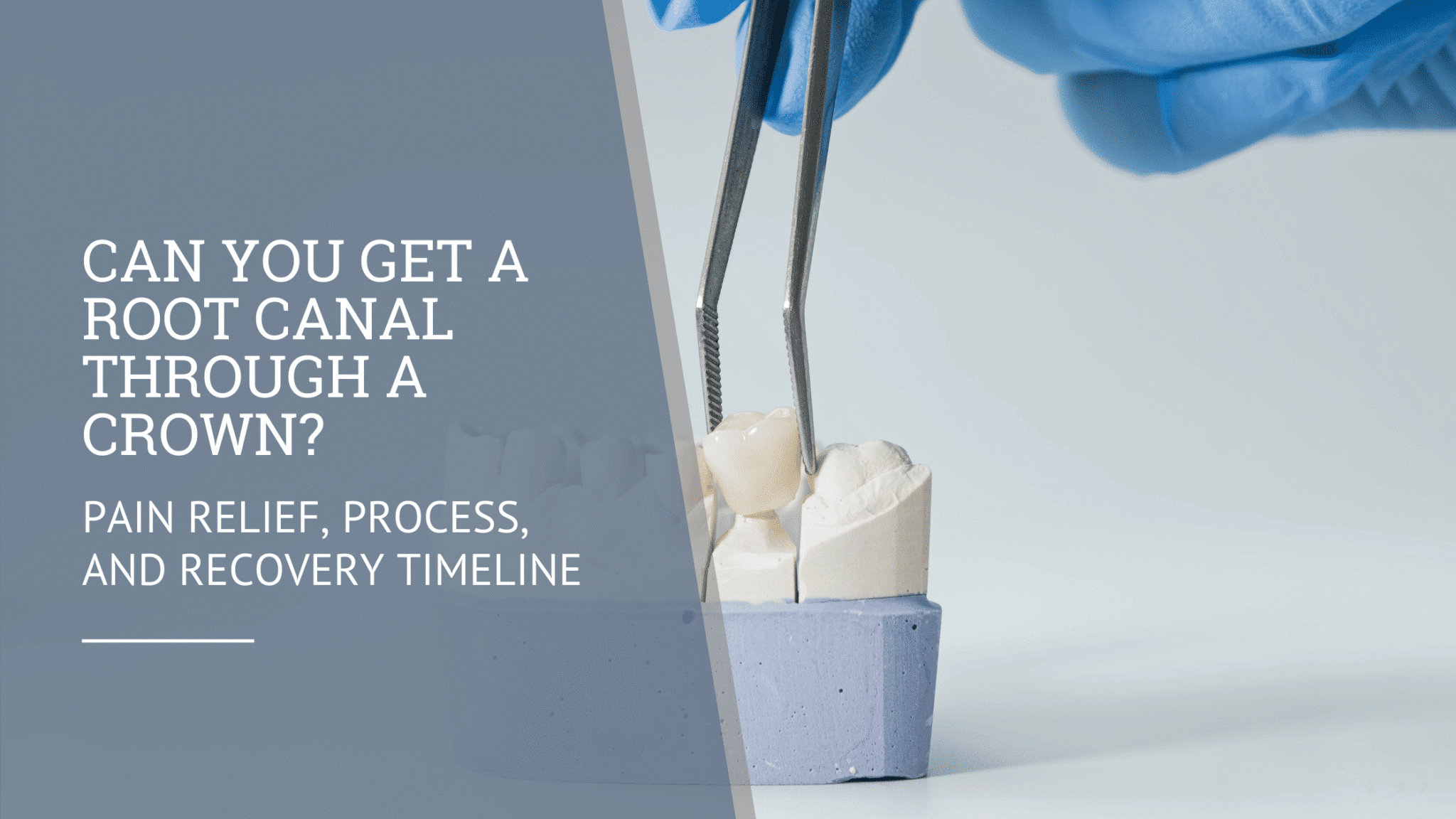
If you have a dental crown and start experiencing tooth pain, you may wonder whether that crown needs to be removed—or if a root canal through a crown is even possible.
This is a very common concern, and the good news is that yes, many root canals can be performed through an existing crown. Below, we explain how the process works, how pain is managed, and what the recovery timeline typically looks like.
Can You Really Get a Root Canal Through a Crown?
Yes. In many cases, an endodontist can access the inner tooth by creating a small opening through the crown. This allows treatment of the infected pulp without removing the crown, as long as the crown is in good condition.
A root canal through a crown is often recommended when:
-
The crown is structurally sound
-
Pain or infection has developed beneath the crown
-
Removing the crown could cause unnecessary damage
-
Preserving the existing restoration helps reduce cost
Each case is evaluated individually to ensure the best long-term outcome.
Why Pain Can Occur Under a Crown
A crown protects the outer portion of a tooth, but the tooth underneath can still become irritated or infected.
Common causes include:
-
Decay beneath the crown
-
Trauma to the tooth
-
Previous dental work irritating the nerve
-
Cracks or micro-leakage allowing bacteria inside
When the pulp becomes inflamed, symptoms often include pressure, lingering sensitivity, or pain when chewing.
How the Root Canal Through a Crown Process Works
The procedure is very similar to a standard root canal, with a few additional considerations.
Step-by-Step Overview
-
Evaluation and imaging to confirm the source of pain
-
Local anesthesia to keep you comfortable
-
Small access opening made through the crown
-
Removal of infected pulp and thorough cleaning
-
Sealing the canals to prevent reinfection
-
Restoring the access point so the crown remains functional
Many patients are surprised by how straightforward and comfortable the process feels.
Is a Root Canal Through a Crown Painful?
Modern root canal treatment is designed to relieve pain, not cause it. Local anesthesia keeps the area numb during the procedure, and most patients describe the experience as no more uncomfortable than getting a filling.
After treatment, mild soreness is normal and typically resolves within a few days.
Root Canal Recovery Timeline: What to Expect
Recovery after a root canal through a crown is usually smooth and predictable.
Typical Recovery Timeline
-
Day of treatment: Mild tenderness or pressure
-
Days 1–3: Gradual improvement as inflammation settles
-
Within a week: Most patients feel back to normal
-
Long term: Tooth functions normally once fully healed
Following post-treatment instructions helps ensure proper healing and comfort.
How to Manage Discomfort After Treatment
Most patients experience minimal discomfort, but these tips can help:
-
Avoid chewing on the treated tooth for a short period
-
Use over-the-counter pain relievers as directed
-
Maintain good oral hygiene
-
Avoid very hard or sticky foods initially
If pain increases or swelling develops, it’s important to follow up promptly.
Will the Crown Need to Be Replaced?
In many cases, the crown can remain in place after treatment. If the crown is damaged, loose, or compromised, replacement may be recommended to protect the tooth long term.
Your endodontist will coordinate with your general dentist if additional restoration is needed.
Why Seeing an Endodontist Matters
Endodontists receive advanced training focused specifically on root canal treatment, including complex cases involving crowns. This expertise allows for:
-
Precise diagnosis
-
Efficient treatment
-
Higher success rates
-
Greater comfort during and after care
Frequently Asked Questions
Can every crown be treated with a root canal through it?
Not always. The crown must be in good condition and properly sealed.
Does insurance cover a root canal through a crown?
Most insurance plans cover the root canal portion, but coverage varies by plan.
How long does the appointment take?
Most procedures are completed in one visit lasting about 60–90 minutes.
Is recovery longer because of the crown?
No. Recovery is similar to any standard root canal.
What happens if I delay treatment?
Delaying care can allow infection to worsen and may increase the risk of tooth loss.