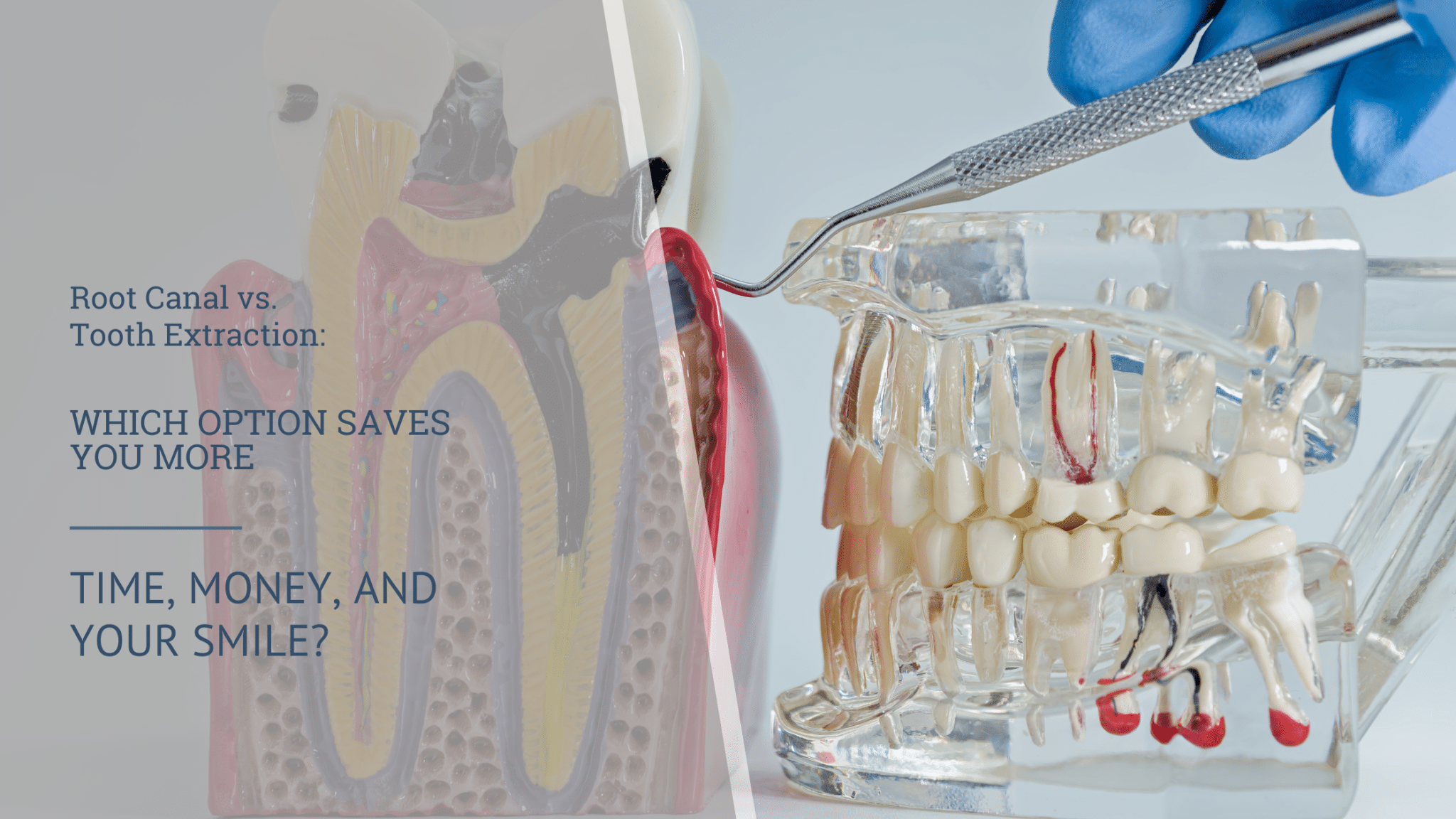
When you’re dealing with severe tooth pain, you may assume the easiest solution is to have the tooth removed. In reality, that’s not always the best option.
One of the most common questions patients ask is, “Should I get a root canal or have the tooth extracted?”
The answer depends on the condition of your tooth, but whenever possible, saving your natural tooth is almost always the preferred choice.
At Eastern Idaho Endodontics, our goal is to preserve your natural smile whenever it’s possible to do so. Here’s what you should know when comparing a root canal vs. tooth extraction.
Root Canal vs. Tooth Extraction: What’s the Difference?
Although both procedures relieve pain caused by infection or damage, they accomplish that goal in very different ways.
Root Canal Treatment
A root canal removes the infected or inflamed tissue from inside the tooth while preserving the healthy outer structure. After the canals are cleaned, shaped, and sealed, the tooth is restored so it can continue functioning for years—often for a lifetime.
Tooth Extraction
An extraction removes the entire tooth from your mouth. While this eliminates the source of infection, it also leaves a gap that typically requires replacement to restore normal function and prevent future dental problems.
Why Saving Your Natural Tooth Is Usually the Best Option
Your natural teeth are designed to work together.
Keeping your original tooth helps:
- Maintain proper chewing function
- Preserve your jawbone
- Prevent neighboring teeth from shifting
- Maintain your natural bite
- Preserve the appearance of your smile
- Avoid more complex restorative procedures
That’s why endodontists specialize in saving teeth whenever possible.
Which Procedure Costs Less?
Many patients are surprised to learn that a root canal is often the more cost-effective option over time.
While an extraction may seem less expensive initially, removing a tooth often creates additional costs.
After an extraction, you may also need:
- A dental implant
- A dental bridge
- A partial denture
- Bone grafting
- Additional restorative treatment
These procedures can significantly increase the total investment required after losing a tooth.
In many cases, saving your natural tooth with root canal treatment helps avoid these future expenses.
Which Option Has a Faster Recovery?
Both procedures have relatively short recovery periods, but healing is often simpler after a successful root canal.
Root Canal Recovery
Most patients:
- Return to work the same day or the next day
- Experience only mild soreness for a few days
- Resume normal activities quickly
Extraction Recovery
After a tooth extraction, patients often experience:
- Swelling
- Bleeding
- Dietary restrictions
- A longer healing period before replacement options can begin
If an implant is planned, treatment may take several months before the process is complete.
Which Procedure Is More Comfortable?
Many people still believe root canals are painful.
The truth is that modern root canal treatment is very similar to having a routine filling.
With today’s advanced anesthetics and technology, the procedure is designed to relieve pain—not cause it.
In many cases, patients experience immediate relief from the infection that caused their discomfort in the first place.
Can Every Tooth Be Saved?
Unfortunately, no.
Some teeth are too badly damaged to restore.
Examples include:
- Severe fractures below the gumline
- Advanced periodontal disease
- Extensive structural damage
- Teeth that cannot be predictably restored
If a tooth cannot be saved, your endodontist will explain why and discuss the most appropriate treatment options.
What If I’ve Already Had a Root Canal?
A previous root canal doesn’t automatically mean extraction is your only option.
In many cases, root canal retreatment can successfully save the tooth.
Retreatment may be recommended if:
- A hidden canal was missed during the original procedure
- A new infection develops
- The restoration leaks over time
- New decay reaches the root canal filling
Another option may be an apicoectomy, a specialized procedure that treats infection at the tip of the root while preserving the tooth.
Before choosing extraction, it’s worth having your tooth evaluated by an endodontist to determine whether retreatment is possible.
When Is Tooth Extraction the Better Choice?
Although preserving your natural tooth is generally preferred, extraction may be recommended when:
- The tooth cannot be repaired
- The fracture extends too far below the gumline
- There isn’t enough healthy tooth structure remaining
- Advanced gum disease has severely weakened support around the tooth
Even in these situations, your endodontist will help you understand your options before making a decision.
Why Endodontists Focus on Saving Teeth
Endodontists receive years of additional advanced training beyond dental school that focuses specifically on diagnosing tooth pain and treating problems inside the tooth.
Our specialty isn’t removing teeth.
It’s saving them.
That specialized training allows us to successfully treat many teeth that might otherwise be considered hopeless.
Don’t Assume Extraction Is Your Only Option
If you’ve been told you may need a tooth removed, it doesn’t always mean extraction is your only choice.
A consultation with an endodontist can determine whether your tooth can still be saved through root canal treatment, retreatment, or another specialized procedure.
Saving your natural tooth is often the healthiest, most predictable, and most cost-effective long-term solution.
Trust Eastern Idaho Endodontics to Help You Save Your Smile
At Eastern Idaho Endodontics, we’re committed to helping patients preserve their natural teeth whenever possible. Using advanced technology and specialized endodontic care, our experienced doctors diagnose the source of tooth pain and recommend the treatment that’s in your best long-term interest.
If you’re deciding between a root canal vs. extraction, let our team provide the answers you need. With convenient locations throughout Eastern Idaho and Wyoming, we’re here to help you protect your smile for years to come.
Contact Eastern Idaho Endodontics today to schedule an evaluation.
Frequently Asked Questions
Is a root canal better than an extraction?
Whenever the tooth can be successfully restored, saving your natural tooth with root canal treatment is generally the preferred option because it preserves your smile, chewing function, and jawbone.
Is a root canal cheaper than pulling a tooth?
Although an extraction may cost less initially, replacing a missing tooth with an implant, bridge, or denture often makes extraction more expensive over time.
Can a tooth be saved after a failed root canal?
Often, yes. Root canal retreatment or an apicoectomy may successfully preserve the tooth, depending on the cause of the problem.
When is extraction the only option?
Extraction may be necessary if a tooth has extensive structural damage, severe fractures below the gumline, or advanced periodontal disease that prevents successful restoration.
Who should I see if I’m deciding between a root canal and an extraction?
An endodontist specializes in evaluating infected or damaged teeth and determining whether they can be successfully saved before extraction is considered.