Being told you need a root canal can make you wonder whether treatment is really necessary. This is especially true if your tooth isn’t hurting much—or if the pain has suddenly disappeared.
So, what happens if you don’t get a root canal?
If the pulp inside your tooth is infected or irreversibly damaged, the problem usually will not heal on its own. Without treatment, pain or infection may progress. In some cases, waiting too long can also make it harder to save the natural tooth.
That doesn’t mean every toothache requires a root canal. However, once a dentist or endodontist determines that root canal treatment is necessary, ignoring the problem can carry risks.
Why Would You Need a Root Canal?
To understand what happens without treatment, it helps to understand why a root canal may be recommended.
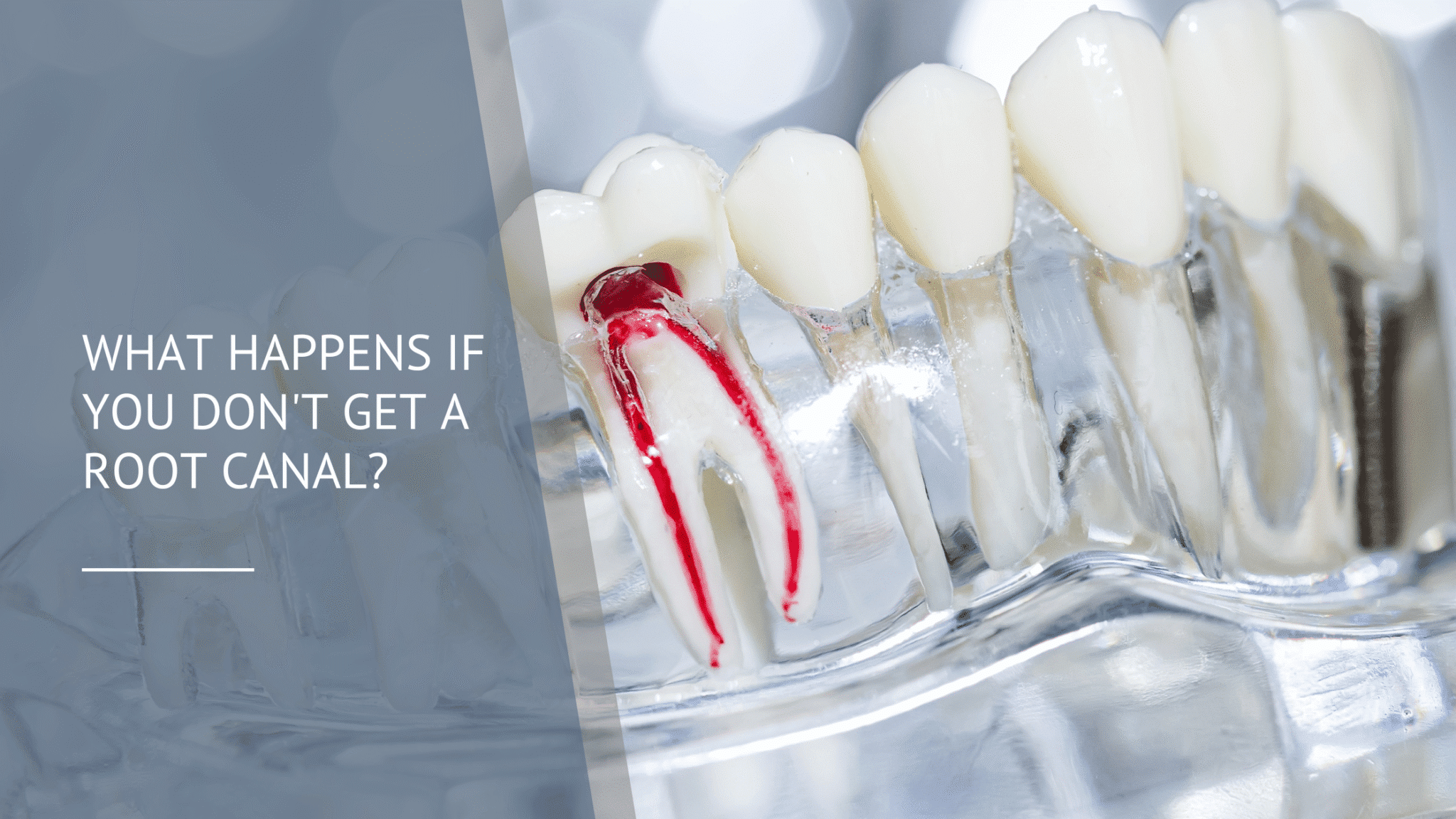
Beneath the hard outer layers of your tooth is a space containing dental pulp. This soft tissue contains nerves, blood vessels, and connective tissue.
The pulp can become inflamed or infected because of:
- Deep tooth decay
- A crack or fracture
- Dental trauma
- Repeated dental procedures
- Damage that allows bacteria to reach the pulp
Sometimes, irritated pulp can recover. However, severely damaged or infected pulp may not be able to heal.
When that happens, root canal treatment can remove the affected tissue and clean and seal the inside of the tooth.
Most importantly, the goal is to save your natural tooth whenever possible.
What Happens If You Don’t Get a Root Canal?
If you need a root canal but don’t get one, the condition inside and around the tooth may continue to progress.
The exact timeline varies. Some patients develop significant symptoms quickly. Others may have mild or intermittent symptoms for quite some time.
However, the absence of severe pain doesn’t mean the tooth is healthy.
Without appropriate treatment, you may eventually experience worsening pain, infection, swelling, an abscess, or damage to the tissues surrounding the tooth.
In some cases, the tooth may eventually become too damaged to save.
Can Tooth Pain Get Worse Without a Root Canal?
Yes. Tooth pain can become more severe as inflammation or infection progresses.
You might initially notice mild sensitivity or occasional discomfort. Over time, symptoms may change.
For example, you may experience:
- Persistent tooth pain
- Throbbing discomfort
- Pain when biting or chewing
- Lingering sensitivity to hot or cold
- Tenderness around the tooth
- Difficulty chewing on one side of your mouth
However, symptoms aren’t always predictable.
A severely damaged tooth can sometimes stop hurting altogether.
What If the Tooth Stops Hurting?
This is where patients can get a false sense of security.
Pain disappearing does not always mean the problem has gone away.
If the nerve tissue inside the tooth becomes severely damaged or dies, you may no longer experience the same pain signals.
Meanwhile, bacteria can remain within the root canal system. Infection may then continue around the root of the tooth.
Therefore, don’t cancel a recommended root canal simply because your tooth feels better.
Instead, contact your dentist or endodontist and discuss the change in symptoms.
Can You Develop a Dental Abscess?
An untreated infection can sometimes lead to a dental abscess.
An abscess is a collection of pus caused by infection. It can develop around the root of an infected tooth and may cause significant discomfort.
Possible signs include:
- Gum or facial swelling
- Severe or throbbing pain
- A bump on the gums
- Drainage or a bad taste in the mouth
- Tenderness when chewing
- Fever or feeling unwell
Some dental abscesses are painful. Others may drain and temporarily feel better.
Either way, an abscess needs professional evaluation.
Can a Tooth Infection Spread?
Yes. A dental infection isn’t necessarily limited to the inside of the tooth.
Infection can extend into the tissues surrounding the root. In more serious situations, it may spread into nearby facial or neck spaces.
This is one reason dental swelling should not be ignored.
Seek prompt dental care if you develop significant swelling, increasing pain, fever, or other concerning symptoms.
If swelling is affecting your ability to breathe or swallow, seek emergency medical attention.
Will Antibiotics Fix the Problem?
Patients sometimes hope antibiotics will eliminate the infection and allow them to avoid a root canal.
However, antibiotics are not a substitute for treating the source of an infected tooth.
Your dentist or endodontist may prescribe antibiotics in certain situations, such as when there are signs of spreading infection. Yet the tooth itself may still require treatment.
Symptoms may improve temporarily with medication. However, if bacteria remain inside the root canal system, the problem can return.
That’s why treating the source of the infection is so important.
Can You Lose the Tooth If You Don’t Get a Root Canal?
Potentially.
One of the main reasons to perform root canal treatment is to preserve a natural tooth that might otherwise be lost.
As infection or structural damage progresses, the prognosis for the tooth can change. Eventually, extraction may become necessary if the tooth can no longer be predictably saved.
However, needing a root canal does not automatically mean you’re going to lose your tooth.
In many cases, endodontic treatment can help preserve the natural tooth.
The key is having it evaluated and treated at the appropriate time.
Is Extraction Better Than Getting a Root Canal?
It depends on the condition of the tooth.
Some teeth cannot be saved because of severe fractures, extensive decay, inadequate remaining tooth structure, or other problems. In those situations, extraction may be appropriate.
However, when a natural tooth can be predictably treated and restored, saving it is often worth considering.
Your dentist and endodontist can evaluate factors such as:
- The location of the damage
- The amount of healthy tooth remaining
- The condition of the root
- Cracks or fractures
- Bone support
- Previous dental treatment
- Whether the tooth can be properly restored
The goal isn’t to perform a root canal on every damaged tooth. It’s to determine the treatment that makes sense for your specific situation.
How Long Can You Go Without Getting a Root Canal?
There is no universal safe waiting period.
A patient might go days or weeks without a dramatic change in symptoms. Another patient could develop significant pain or swelling much sooner.
That’s why asking, “How long can I wait?” isn’t as useful as asking, “How urgent is treatment for my tooth?”
Once you’ve been told you need a root canal, schedule treatment as soon as reasonably possible or ask your provider how urgently the tooth needs to be treated.
Don’t wait for severe pain to provide the answer.
Can You Have an Infected Tooth Without Pain?
Yes.
Although pain is one of the most recognizable signs of a dental problem, not every infected or damaged tooth causes noticeable pain.
Some problems are discovered during a routine dental examination or on dental imaging.
Other patients may notice less obvious symptoms, such as:
- Tooth discoloration
- Mild tenderness
- A recurring bump on the gums
- Occasional swelling
- An unusual taste or drainage
- Discomfort only when biting
This is another reason symptoms alone cannot determine whether a tooth needs treatment.
When Should You See an Endodontist?
An endodontist specializes in diagnosing tooth pain and treating problems involving the dental pulp and tissues around the roots.
Your dentist may refer you to an endodontist if you have a tooth that requires specialized evaluation or root canal treatment.
You may also need an endodontic evaluation if you have:
- Significant or persistent tooth pain
- Pain when biting
- Lingering temperature sensitivity
- Swelling near a tooth
- A cracked or injured tooth
- A previously treated tooth that hurts again
- A suspected dental abscess
- Tooth pain that has been difficult to diagnose
Getting an accurate diagnosis is the first step. From there, your provider can explain whether root canal treatment is needed and whether the natural tooth can be saved.
Frequently Asked Questions About Not Getting a Root Canal
What happens if you don’t get a root canal right away?
The problem may remain stable for a period of time, or it may progress. There is no reliable timeline. If the pulp is infected or irreversibly damaged, delaying treatment may increase the risk of pain, swelling, infection, or additional damage.
Can a tooth that needs a root canal heal itself?
If the pulp is irreversibly damaged or infected, it generally cannot heal on its own. An examination and diagnostic testing are necessary to determine the condition of the pulp.
What happens if I need a root canal but have no pain?
You may still need treatment. Some infected or damaged teeth cause little or no pain. Your dentist or endodontist will use your examination, testing, symptoms, and dental imaging to determine whether treatment is necessary.
Can I just take antibiotics instead?
Antibiotics may be appropriate for certain spreading dental infections. However, they do not replace treatment of the source inside an infected tooth when root canal treatment is needed.
Is it too late to save my tooth?
Not necessarily. Even a tooth causing significant pain may still be treatable. However, only an examination can determine whether the tooth can be predictably saved.
What if I’m scared to get a root canal?
Tell your endodontic team. Modern root canal treatment is designed to address the source of tooth pain and infection. Understanding each step of treatment can also make the process feel much more manageable.
Don’t Ignore a Tooth That Needs Treatment
So, what happens if you don’t get a root canal?
The answer depends on the condition of your tooth. However, an infected or irreversibly damaged pulp isn’t something you should expect to resolve simply by waiting.
Pain may worsen. Infection can progress. An abscess may develop. In some cases, delaying treatment can also reduce the chances of saving the natural tooth.
On the other hand, timely endodontic treatment may allow you to address the infection while keeping the tooth.
Eastern Idaho Endodontics specializes in diagnosing tooth pain and providing advanced root canal treatment with one central goal: saving natural teeth whenever possible.
If you’ve been told you need a root canal—or you’re experiencing tooth pain, swelling, or other concerning symptoms—don’t wait for the problem to become an emergency.
Schedule an evaluation with Eastern Idaho Endodontics and find out what your tooth needs.