A toothache is never fun. But what happens when an infection inside your tooth starts spreading beyond the tooth itself? Can it affect your gums, jaw, or even other parts of your body?
The short answer is yes. A tooth infection can spread into the surrounding tissues and, in some cases, lead to serious health problems. While many dental infections remain localized, ignoring symptoms can allow an infection to become more difficult to treat.
The good news? Recognizing the warning signs and seeking care early can help prevent complications.
At Eastern Idaho Endodontics, we specialize in diagnosing and treating infections that develop inside teeth. Our goal is to eliminate the source of the problem and help save your natural tooth whenever possible.
How Does a Tooth Infection Start?
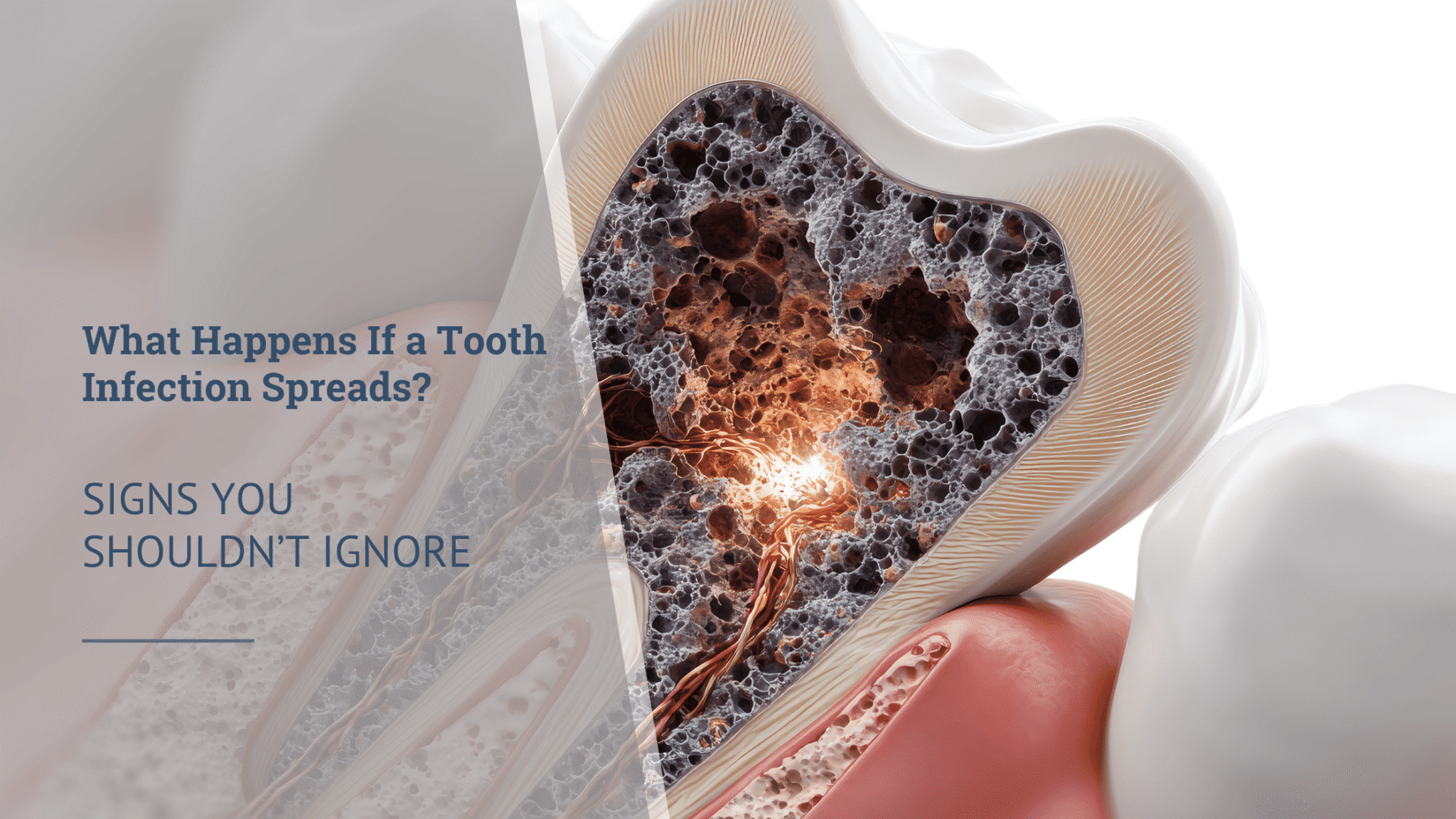
A tooth infection often begins when bacteria enter the soft tissue inside your tooth, known as the dental pulp.
The pulp contains nerves, blood vessels, and connective tissue. Deep cavities, cracks, injuries, or previous dental problems can allow bacteria to reach this area.
Once bacteria enter the pulp, an infection may develop. Over time, the infection can move through the root canal system and affect the tissues around the root.
Common causes of tooth infections include:
-
Deep, untreated tooth decay
-
Cracked or broken teeth
-
Dental injuries or trauma
-
Leaking or damaged restorations
-
Problems involving previously treated teeth
An infection may cause significant pain. However, some infected teeth produce very little discomfort, especially after the pulp tissue dies.
That is why pain alone cannot tell you how serious a tooth infection has become.
What Happens If a Tooth Infection Spreads?
When bacteria spread beyond the tooth, they can cause inflammation and infection in nearby tissues.
At first, the infection may affect the area around the root. It can then spread into the surrounding gums, jawbone, or facial tissues.
In more serious cases, the infection can extend into deeper spaces in the face or neck. Rarely, it can enter the bloodstream and contribute to life-threatening complications.
The progression varies from person to person. Not every infected tooth leads to a severe infection, but there is no reliable way to predict which untreated infections will worsen.
This is why prompt dental care matters.
What Are the Warning Signs of a Spreading Tooth Infection?
A spreading tooth infection can produce several symptoms. Some begin gradually, while others develop quickly.
Watch for these warning signs:
-
Increasing or persistent tooth pain
-
Swelling around the gums or jaw
-
Facial swelling
-
A pimple-like bump on the gums
-
Pain when biting or chewing
-
A bad taste or drainage in the mouth
-
Fever or chills
-
Difficulty opening your mouth
-
Feeling unusually tired or unwell
These symptoms do not always mean an infection has spread. However, they are reasons to seek professional evaluation.
If you develop fever, facial swelling, or worsening symptoms, seek prompt dental or medical care.
Significant or rapidly increasing swelling, difficulty breathing or swallowing, or swelling near the eye requires emergency medical attention.
Can a Tooth Infection Cause Facial Swelling?
Yes. Facial swelling is one of the more concerning signs of a dental infection.
When an infection spreads beyond the tooth, inflammation and fluid may build up in the surrounding tissues. This can cause swelling in the cheek, jaw, or other areas of the face.
The swelling may begin near one tooth and become more noticeable over time.
In some cases, swelling can develop even when the tooth itself does not hurt very much.
Do not wait for facial swelling to become severe before seeking care. Contact a dental professional promptly if you notice new or increasing swelling.
If swelling spreads rapidly or affects your breathing, swallowing, or vision, seek emergency medical care immediately.
What Is a Tooth Abscess?
A tooth abscess is a collection of pus that develops because of a bacterial infection.
One type, called a periapical abscess, forms near the tip of a tooth’s root. It often develops when bacteria infect the pulp and travel through the root canal system.
Symptoms of a tooth abscess may include:
-
Throbbing or persistent tooth pain
-
Tenderness when chewing
-
Swollen gums
-
A small bump near the affected tooth
-
Drainage or an unpleasant taste
-
Swelling around the jaw or face
Sometimes an abscess drains through the gums. When this happens, pressure may decrease and the tooth may temporarily feel better.
However, drainage does not mean the infection has healed. The underlying source still needs treatment.
Can a Tooth Infection Spread Without Pain?
Yes, and this often surprises patients.
A tooth infection does not always cause a severe toothache. If the pulp inside the tooth dies, you may no longer feel the same type of pain.
However, bacteria can remain inside the root canal system and continue affecting the tissues around the root.
Some patients first notice a small bump on the gum, mild swelling, or an unusual finding during a dental X-ray.
Others may not notice symptoms until the infection becomes more advanced.
This is one reason we encourage patients not to ignore changes around a tooth, even when they are not experiencing pain.
You can learn more about needing a root canal without tooth pain and why an evaluation is important.
Can a Tooth Infection Spread to Other Parts of the Body?
Yes, although serious complications are uncommon.
Most dental infections begin in or around a specific tooth. However, bacteria can sometimes spread into nearby facial spaces, the jaw, or the neck.
In rare cases, severe dental infections can contribute to complications such as:
-
Deep infections in the face or neck
-
Infection involving the jawbone
-
Serious swelling that threatens the airway
-
Sepsis, a life-threatening response to infection
These complications are not the typical outcome of a tooth infection. Still, they explain why dentists take signs of spreading infection seriously.
If you experience rapidly worsening swelling, difficulty breathing, difficulty swallowing, confusion, or severe illness, seek emergency medical attention.
Will Antibiotics Stop a Tooth Infection From Spreading?
Antibiotics can help treat certain dental infections, especially when bacteria have spread beyond the tooth or the patient has signs of systemic illness.
However, antibiotics alone often cannot eliminate the source of an infection inside a tooth.
Why?
Once the pulp tissue dies, the root canal system no longer has the same blood supply. This makes it difficult for antibiotics to reach and eliminate bacteria inside the canals.
That is why definitive dental treatment is usually necessary.
Depending on the condition of the tooth, treatment may include root canal therapy, drainage, or extraction.
Your dentist or endodontist will determine whether antibiotics are appropriate.
For more information, read our article about antibiotics versus root canal treatment.
Can a Root Canal Stop a Tooth Infection?
In many cases, yes.
When bacteria infect the pulp inside a tooth, root canal treatment can remove the infected tissue and address the source of the problem.
During root canal treatment, an endodontist carefully removes the affected pulp. Next, we clean and disinfect the root canals before filling and sealing them.
This process helps eliminate bacteria from inside the tooth and allows the surrounding tissues to heal.
If the tooth has enough healthy structure remaining, treatment may allow you to keep your natural tooth rather than having it removed.
However, root canal treatment is not appropriate for every tooth. Severe cracks, fractures, or extensive damage can affect whether the tooth can be saved.
An evaluation helps determine the best treatment option.
How Quickly Can a Tooth Infection Spread?
There is no single timeline.
Some tooth infections remain localized for an extended period. Others can worsen within hours or days, particularly when swelling begins spreading into surrounding tissues.
Several factors can influence how an infection progresses, including the location of the tooth, the bacteria involved, and a person’s overall health.
Because the timing is unpredictable, it is not safe to assume that you have several days or weeks before treatment becomes necessary.
If you suspect an infection, contact your dentist or endodontist promptly.
When Is a Tooth Infection an Emergency?
Not every tooth infection requires a trip to the emergency room. However, certain symptoms need immediate attention.
Seek emergency medical care if you experience:
-
Difficulty breathing or swallowing
-
Rapidly increasing facial or neck swelling
-
Swelling around the eye or changes in vision
-
Severe difficulty opening your mouth, especially with swelling
-
Confusion, faintness, or signs of serious illness
Fever with facial swelling or worsening dental symptoms also requires urgent assessment.
For localized tooth pain, tenderness, or gum swelling without these emergency symptoms, contact a dental professional as soon as possible.
If you’re unsure how serious your symptoms are, seek professional guidance rather than waiting for the problem to worsen.
What Should I Do If I Think My Tooth Is Infected?
First, do not ignore the symptoms.
Contact your dentist or an endodontist to arrange an evaluation. Explain when the pain started, whether you have swelling, and whether your symptoms have changed.
While waiting for your appointment, you may be able to manage discomfort with appropriate over-the-counter pain medication, following the label directions and your healthcare provider’s advice.
However, temporary pain relief does not treat the infection itself.
Avoid placing aspirin directly against your gums, attempting to drain an abscess yourself, or taking leftover antibiotics without medical guidance.
Most importantly, seek urgent care if swelling increases or you develop other concerning symptoms.
How Can an Endodontist Help Save an Infected Tooth?
Endodontists specialize in diagnosing tooth pain and treating problems involving the dental pulp and root canal system.
At Eastern Idaho Endodontics, we evaluate the affected tooth, review your symptoms, and use appropriate diagnostic tests to determine the source of the problem.
If root canal treatment is the right option, our goal is to remove the infected tissue, address the source of the infection, and preserve your natural tooth.
We also work with referring dentists to help patients receive the care they need.
Early evaluation can sometimes provide more treatment options and help prevent additional complications.
Don’t Wait for a Tooth Infection to Become Serious
A tooth infection may begin with something as simple as a lingering toothache or tenderness when chewing. However, symptoms such as swelling, fever, or worsening pain can signal a more serious problem.
The important thing to remember is that a tooth infection rarely resolves without appropriate dental treatment.
At Eastern Idaho Endodontics, we focus on identifying the source of tooth infections and helping patients save their natural teeth whenever possible.
With locations in Idaho Falls, Rexburg, Pocatello, Burley, and Hailey, Idaho, along with Jackson and Pinedale, Wyoming, our team provides specialized endodontic care throughout Eastern Idaho and Western Wyoming.
If you have persistent tooth pain, swelling, or concerns about an infected tooth, contact Eastern Idaho Endodontics to schedule an evaluation.
Frequently Asked Questions About Spreading Tooth Infections
How do I know if my tooth infection is spreading?
Possible signs include increasing swelling, worsening pain, fever, facial tenderness, and feeling unwell. A dental professional can evaluate your symptoms and determine whether the infection has spread.
Can a tooth infection spread to your jaw?
Yes. Bacteria from an infected tooth can affect the tissues and bone around the root. In more serious cases, the infection can extend into nearby jaw or facial structures.
Can a tooth infection make you sick?
Yes. Some dental infections cause fever, chills, fatigue, or a general feeling of illness. These symptoms deserve prompt medical or dental attention.
Can an infected tooth stop hurting on its own?
Yes. Pain may decrease if the pulp dies or an abscess begins draining. However, the infection can remain even when the pain disappears.
Will a tooth abscess go away without treatment?
A dental abscess generally requires professional treatment to eliminate the source of infection. Even if it drains and the swelling improves, the underlying problem may remain.
Can antibiotics cure an infected tooth without a root canal?
Antibiotics may help control certain infections, but they usually cannot eliminate bacteria inside an infected root canal system. Root canal treatment or extraction may be necessary to address the source.
Can a spreading tooth infection be life-threatening?
In rare cases, yes. Severe dental infections can spread into deeper tissues or contribute to serious complications. Difficulty breathing or swallowing, rapidly increasing swelling, and signs of severe illness require emergency medical care.