Online Payment
Request an Appointment

Why Does My Root Canal Tooth Hurt Years Later?

A root canal is designed to remove infected or damaged tissue from inside a tooth and help you keep your natural tooth. In many cases, a treated tooth can function normally for years. So, what does it mean when a root canal tooth hurts years later? New pain does not always mean the original root canal failed. Several things can cause discomfort in or around a previously treated tooth. For example, a new infection, a crack, problems with the restoration, or changes in the surrounding tissues may be responsible. Most importantly, pain that returns months or years after treatment deserves
2026-09-04T13:44:07+00:00September 1st, 2026|Endodontics, tooth pain|

Root Canal Pain: What’s Normal, What’s Not, and When to Call Your Endodontist

If you've recently had a root canal, it's completely normal to wonder whether the discomfort you're feeling is part of the healing process—or a sign that something isn't right. One of the most common questions we hear at Eastern Idaho Endodontics is, "How much root canal pain is normal?" The good news is that most patients experience only mild soreness that improves over the course of a few days. In fact, modern root canal treatment is designed to relieve pain—not cause it. Here's what you can expect during recovery, what's considered normal, and when it's time to give your endodontist

2026-09-04T13:44:07+00:00August 10th, 2026|root canal treatment, tooth pain|

Don’t Carry Tooth Pain Into Another Year: Why Now Is the Time to Get Answers

It's easy to put off dental care. Life gets busy. Work schedules fill up. Family commitments take priority. And when tooth pain comes and goes, many people convince themselves it can wait a little longer. But if you've been dealing with lingering tooth pain, sensitivity, swelling, or discomfort for weeks—or even months—there is an important question worth asking: Why continue living with uncertainty when answers may be available today? As the year moves forward, now is an excellent time to stop ignoring symptoms and take the first step toward protecting your oral health. Why People Delay Treatment Most patients do

2026-09-04T13:44:08+00:00June 29th, 2026|tooth pain|

Are You Chewing on One Side of Your Mouth? It Could Be a Sign Something Is Wrong

Most people don't spend much time thinking about how they chew. Eating is something we do automatically every day. But if you find yourself consistently chewing on one side of your mouth, avoiding certain foods, or favoring one side when you eat, your teeth may be trying to tell you something. While occasional one-sided chewing is usually not a cause for concern, a habit of consistently avoiding one side of your mouth can sometimes signal an underlying dental problem. In many cases, patients adapt to discomfort without realizing it, gradually changing how they eat to avoid a sensitive or painful

2026-09-04T13:44:09+00:00June 25th, 2026|tooth pain|

Tooth Pain Went Away? Why That Doesn’t Always Mean the Problem Is Go

Few things are more frustrating than a toothache. The discomfort can make it difficult to eat, sleep, focus at work, or enjoy your daily routine. When that pain suddenly disappears, it's natural to feel relieved and assume the problem has resolved itself. Unfortunately, that isn't always the case. One of the most common misconceptions in dentistry is that if tooth pain goes away, the tooth must be healing. In reality, some of the most serious dental infections can become less painful even as the underlying problem continues to worsen. Understanding why tooth pain sometimes disappears can help you avoid delaying

2026-09-01T15:25:46+00:00June 21st, 2026|tooth pain|

What Is an Abscessed Tooth and Why Should It Never Be Ignored?

A toothache is easy to dismiss when life gets busy. Maybe the pain comes and goes, or perhaps it seems to improve after a few days. Unfortunately, some dental problems do not simply resolve on their own. One of the most serious conditions that can develop is an abscessed tooth. An abscessed tooth is a dental infection that occurs when bacteria enter the inner portion of the tooth or surrounding tissues. Left untreated, this infection can continue spreading, damaging nearby structures and leading to more complicated treatment needs. Understanding the warning signs of an abscessed tooth can help you seek

2026-09-01T15:25:46+00:00June 16th, 2026|root canal treatment, tooth pain|

Summer Dental Emergencies: What to Do If Tooth Pain Strikes While Traveling

Summer is the season for road trips, family vacations, camping adventures, and making memories. The last thing anyone wants is a sudden toothache interrupting their travel plans. Unfortunately, summer dental tooth pain can happen at any time, and it often seems to appear when it's least convenient. If you experience tooth pain while traveling, it's important not to ignore it. What may seem like a minor discomfort can quickly develop into a more serious dental emergency if left untreated. Understanding the warning signs and knowing what to do can help protect your oral health and potentially save your tooth. Why

2026-09-01T15:25:46+00:00June 5th, 2026|Endodontics, tooth pain|

7 Hidden Signs You Need an Endodontist NOW (Before It’s Too Late for Your Idaho Falls Tooth!)

Do you ever feel a small twinge in your tooth and hope it just goes away? Many people in Idaho Falls do exactly that. They wait for the pain to become unbearable before they call a dentist. However, your teeth are very good at sending early warning signs you need a root canal. Specifically, they often send "hidden" signs that something is wrong deep inside. If you catch these signs early, you have a much better chance of saving your natural tooth. At Eastern Idaho Endodontics, we want to help you stay ahead of dental problems. We believe that knowledge

2026-06-17T20:54:02+00:00May 20th, 2026|root canal treatment, tooth pain|

Addressing Root Canal Pain: Strategies for Relief

If you’re dealing with tooth pain—especially the kind that lingers, throbs, or wakes you up at night—you’re not alone. One of the most common reasons patients seek treatment is discomfort caused by infection deep inside the tooth. The good news? A root canal is designed to eliminate that pain at the source—not cause it. At Eastern Idaho Endodontics, we focus on helping patients understand what’s happening, what to expect, and how to find real, lasting relief. Let’s break down root canal pain, why it happens, and the best strategies to relieve it. What Causes Root Canal Pain? Root canal pain

2026-06-17T20:54:04+00:00April 29th, 2026|root canal treatment, tooth pain|

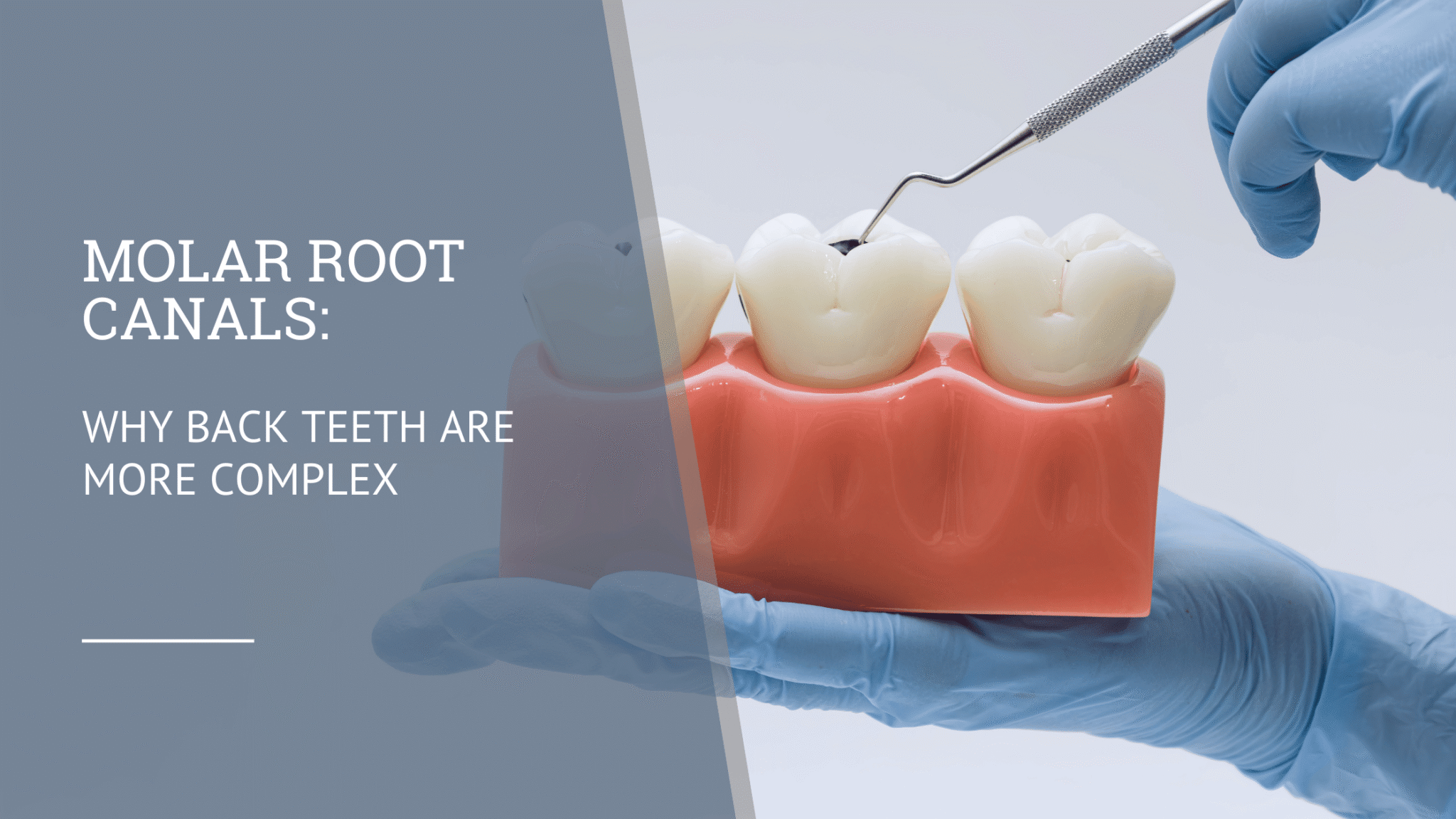
Molar Root Canals: Why Back Teeth Are More Complex

Not all root canals are the same. When patients hear they need a molar root canal, they often ask why treatment sounds more involved than a root canal on a front tooth. The short answer is this: back teeth are more complex by nature. Understanding why molar root canals are different—and how that affects treatment and cost—can help patients feel more confident and prepared. At Eastern Idaho Endodontics, we regularly treat molars that require advanced expertise to save. What Is a Molar Root Canal? A molar root canal treats infection or damage inside one of the back teeth, typically the

2026-05-05T17:23:22+00:00February 13th, 2026|Endodontics, root canal treatment, tooth pain|
Go to Top