Most people expect a dental problem to come with pain. However, sometimes the first sign that something is wrong is a change in color.
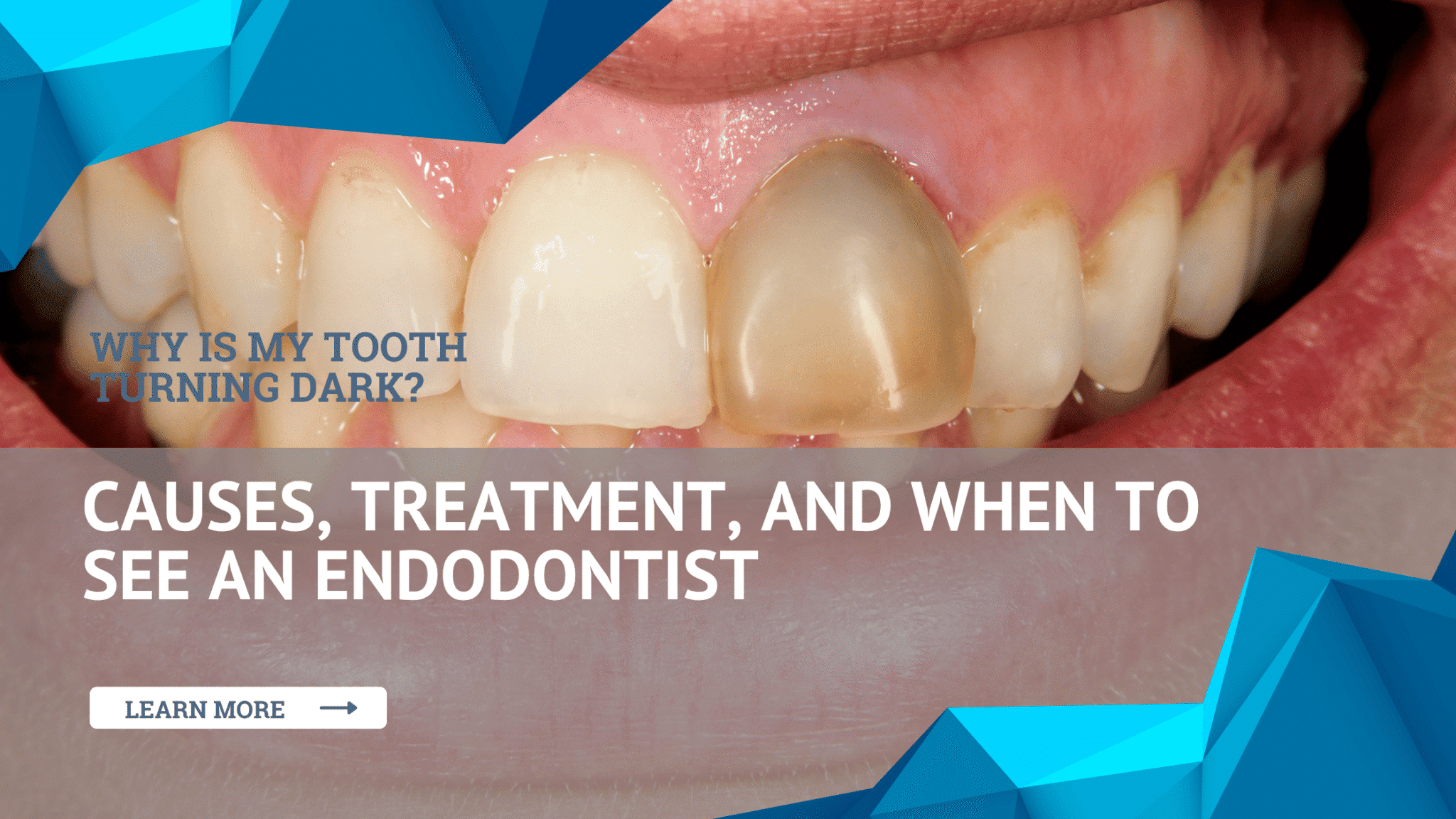
If one tooth suddenly looks darker than the others, you may be wondering what happened. While not every discolored tooth is a serious problem, a gray, yellow, or dark tooth can sometimes signal damage deep inside the tooth.
Understanding the possible causes of tooth discoloration after trauma can help you know when it’s time to seek treatment.
Why Is My Tooth Turning Dark?
A tooth can change color for many reasons. In some cases, discoloration is caused by surface stains from coffee, tea, or tobacco. However, when a single tooth becomes noticeably darker than the surrounding teeth, the cause is often internal.
A dark tooth may appear:
- Gray
- Yellow
- Brown
- Purple
- Darker than neighboring teeth
Changes in color can happen gradually or suddenly.
Can Trauma Cause Tooth Discoloration?
Yes. One of the most common causes of tooth discoloration after traumatis an injury to the tooth.
Trauma can occur after:
- A sports injury
- A fall
- A car accident
- Biting into something hard
- A blow to the mouth
Even if the tooth does not crack or break, the impact can damage the nerve and blood supply inside the tooth.
Sometimes the injury happened years ago, and patients do not immediately connect it to the discoloration they are seeing now.
Does a Dark Tooth Mean the Tooth Is Dead?
Not always—but it can.
When the nerve inside a tooth is severely damaged, it may stop receiving blood flow. Over time, the inner tissue begins to break down, causing the tooth to darken.
Common dead tooth symptoms include:
- Tooth discoloration
- Sensitivity when chewing
- Swelling around the gums
- A pimple-like bump near the tooth
- Pain that comes and goes
- A history of trauma
Some dead teeth cause significant discomfort, while others cause very little pain at all.
Can You Need a Root Canal for a Dark Tooth?
Yes. In some cases, a dark tooth root canal is necessary to remove damaged or infected tissue from inside the tooth.
A root canal may be recommended if:
- The nerve has died.
- Infection is present.
- The tooth is painful.
- Swelling has developed.
- X-rays show damage around the root.
Root canal treatment allows your endodontist to save the natural tooth while eliminating infection and preventing further complications.
What Other Conditions Can Cause Tooth Discoloration?
Not every dark tooth requires root canal treatment.
Other possible causes include:
- Deep tooth decay
- Old fillings
- Internal bleeding inside the tooth
- Certain medications
- Normal aging
- Enamel wear
Because there are many possible causes, it is important to have the tooth examined rather than trying to diagnose the problem yourself.
When Should You See an Endodontist?
You should schedule an evaluation if:
- One tooth is darker than the others.
- You recently injured your mouth.
- You have swelling or tenderness.
- The tooth hurts when you bite down.
- You notice sensitivity to hot or cold foods.
- The discoloration continues to worsen.
An endodontist specializes in diagnosing problems inside the tooth and can determine whether the discoloration is cosmetic or a sign of deeper damage.
Can a Dark Tooth Become White Again?
The answer depends on the cause.
If the discoloration is caused by nerve damage or infection, treating the underlying problem is the first step. In some cases, whitening procedures or cosmetic restorations may improve the tooth’s appearance afterward.
Your dentist or endodontist can discuss the options that are best for your situation.
What Happens If You Ignore a Dark Tooth?
Ignoring a dark tooth may allow an infection to progress.
Without treatment, the problem can lead to:
- Increased pain
- Gum swelling
- Bone loss
- Abscess formation
- More extensive treatment
The sooner the cause is identified, the better the chance of preserving your natural tooth.
Frequently Asked Questions
Can a tooth die without hurting?
Yes. Some teeth lose their nerve supply without causing significant pain, especially after an injury.
How long after trauma can a tooth turn dark?
Discoloration may appear within days, months, or even years after the original injury.
Does every dark tooth need a root canal?
No. Some cases are cosmetic, while others involve infection or nerve damage. An examination is needed to determine the cause.
Is a dark tooth an emergency?
Not always, but it should be evaluated promptly—especially if it is accompanied by pain, swelling, or sensitivity.
Expert Care for Injured and Discolored Teeth
A tooth that changes color is often your body’s way of signaling that something deeper may be happening.
At Eastern Idaho Endodontics, our team specializes in diagnosing tooth pain, evaluating dental injuries, and preserving natural teeth whenever possible. If you’ve noticed a dark or discolored tooth, don’t ignore it—an early evaluation may help prevent more serious problems down the road.