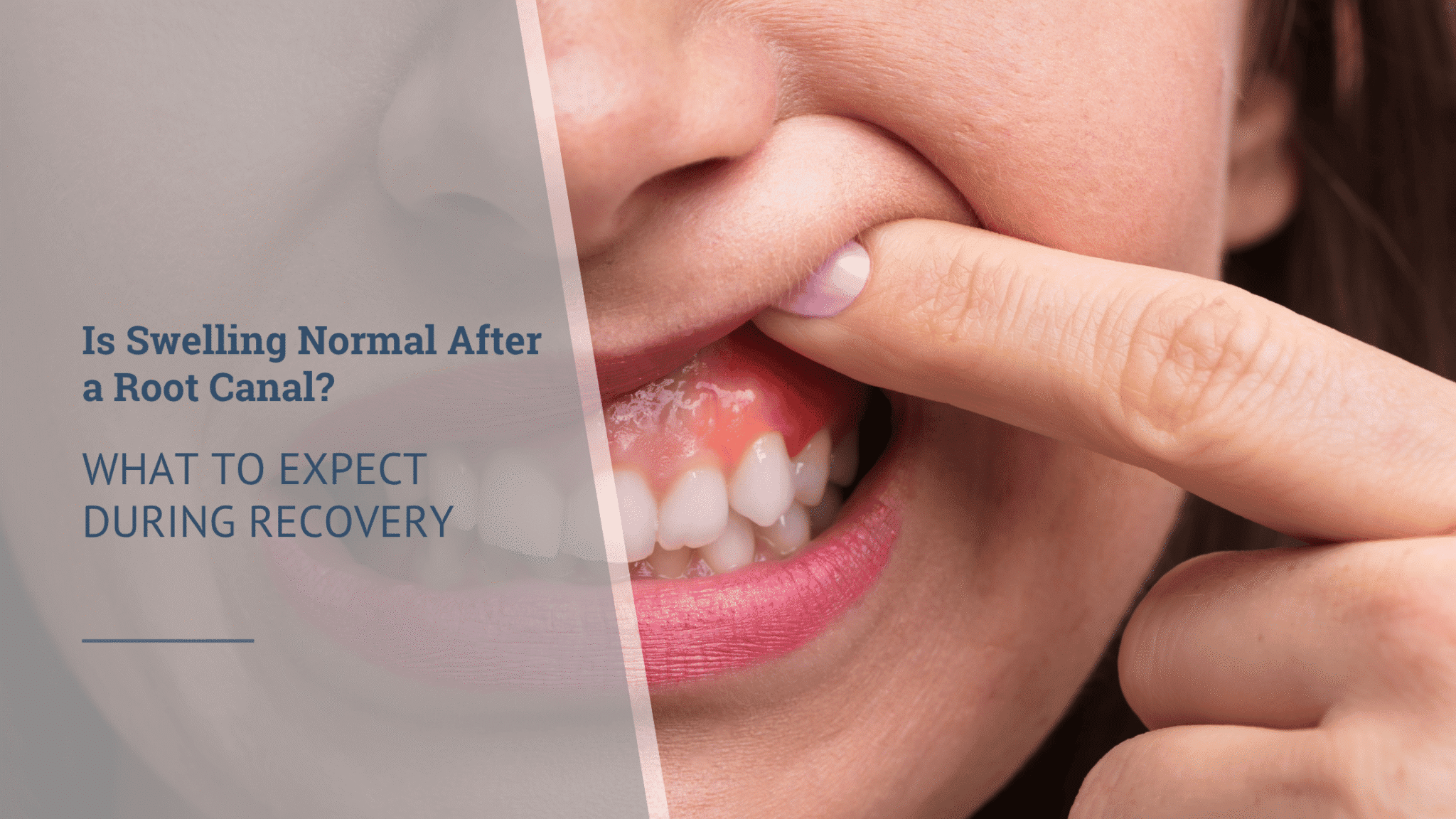
A root canal removes bacteria and infected tissue from inside the tooth. Although the source of the infection has been treated, the surrounding tissues may still be inflamed as your body begins healing.
Swelling is often more noticeable if:
- The tooth had a significant infection.
- An abscess was present.
- There was swelling before treatment.
- The surrounding tissues were already irritated.
This inflammatory response is your body’s natural way of repairing damaged tissue.
How Much Swelling Is Normal?
For most patients, swelling is mild.
You may notice:
- Slight puffiness around the treated tooth
- Mild tenderness when chewing
- Minor gum inflammation
- A feeling that the area is “different” or slightly sore
Some patients experience very little swelling, while others notice more depending on the severity of the original infection.
Every recovery is unique.
How Long Does Swelling Last?
Most swelling begins improving within 48 to 72 hours.
Many patients continue feeling better each day, with most symptoms resolving within about one week.
If an infection was severe before treatment, healing may take a little longer.
It’s important to continue following your dentist’s or endodontist’s instructions throughout your recovery.
How Can You Reduce Swelling?
There are several simple ways to help your body heal.
During the first couple of days:
- Take medications exactly as prescribed.
- Use an ice pack on the outside of your face for short intervals if recommended.
- Eat soft foods.
- Avoid chewing on the treated tooth until your dentist advises otherwise.
- Keep the area clean by brushing and flossing carefully.
Getting plenty of rest and staying hydrated can also support healing.
When Should You Call Your Endodontist?
While mild swelling is expected, some symptoms should not be ignored.
Contact your dental provider if you experience:
- Swelling that continues getting worse after several days
- Difficulty swallowing or breathing
- A fever
- Severe or worsening pain
- Pus or drainage around the tooth
- Swelling that spreads into your face or neck
These symptoms could indicate that additional evaluation is needed.
Is It Normal for the Tooth to Feel Sore?
Yes.
The tissues around the tooth may remain tender for several days after treatment.
Most patients describe the discomfort as mild and manageable with over-the-counter or prescribed medication.
Pain should gradually improve—not become more severe.
Will Swelling Affect the Success of My Root Canal?
Not at all.
Temporary swelling does not mean your treatment has failed.
In fact, many teeth that had significant infections before treatment require time for the surrounding bone and tissues to heal completely.
Root canal therapy has an excellent long-term success rate, and temporary inflammation is often simply part of the normal healing process.
Frequently Asked Questions
Is swelling after a root canal common?
Yes. Mild swelling is a normal response, especially if the tooth was infected before treatment.
How many days should swelling last?
Most swelling begins improving within two to three days and continues resolving over the following week.
Should I use ice or heat?
Ice is generally more helpful during the first 24 to 48 hours. Always follow the specific instructions provided by your dental team.
When is swelling considered an emergency?
Swelling that affects breathing or swallowing, rapidly spreads, or is accompanied by fever should be evaluated immediately.
Trust Your Recovery to the Specialists
Healing after a root canal is usually straightforward, and mild swelling is often a normal part of the process.
At Eastern Idaho Endodontics, we’re committed to helping patients understand every stage of treatment—from diagnosis through recovery. If you have concerns about swelling after a root canal or your symptoms aren’t improving as expected, don’t wait to reach out.
Our experienced team is here to answer your questions, evaluate your recovery, and help you get back to smiling comfortably.