One of the most common questions patients ask is, “Do I really need a crown after a root canal?”
The short answer is: not always. However, many teeth do benefit from a dental crown after root canal treatment. A crown helps protect the tooth, restore its strength, and reduce the risk of future fractures.
The right treatment depends on several factors, including which tooth was treated, how much healthy tooth remains, and how much pressure that tooth handles every day.
Let’s take a closer look at when a crown is recommended and why it can make such an important difference.
Why Does a Tooth Become Weaker After a Root Canal?
A root canal removes infected or damaged tissue from inside the tooth. Once the infection is gone, the inside of the tooth is cleaned, disinfected, and sealed.
Although the procedure saves the tooth, the tooth itself may already have been weakened by:
- Deep decay
- A large filling
- Previous dental work
- A crack or fracture
- Infection that destroyed healthy tooth structure
In many cases, the root canal is not what weakens the tooth. Instead, the damage that required treatment has already reduced the tooth’s strength.
What Does a Crown Do?
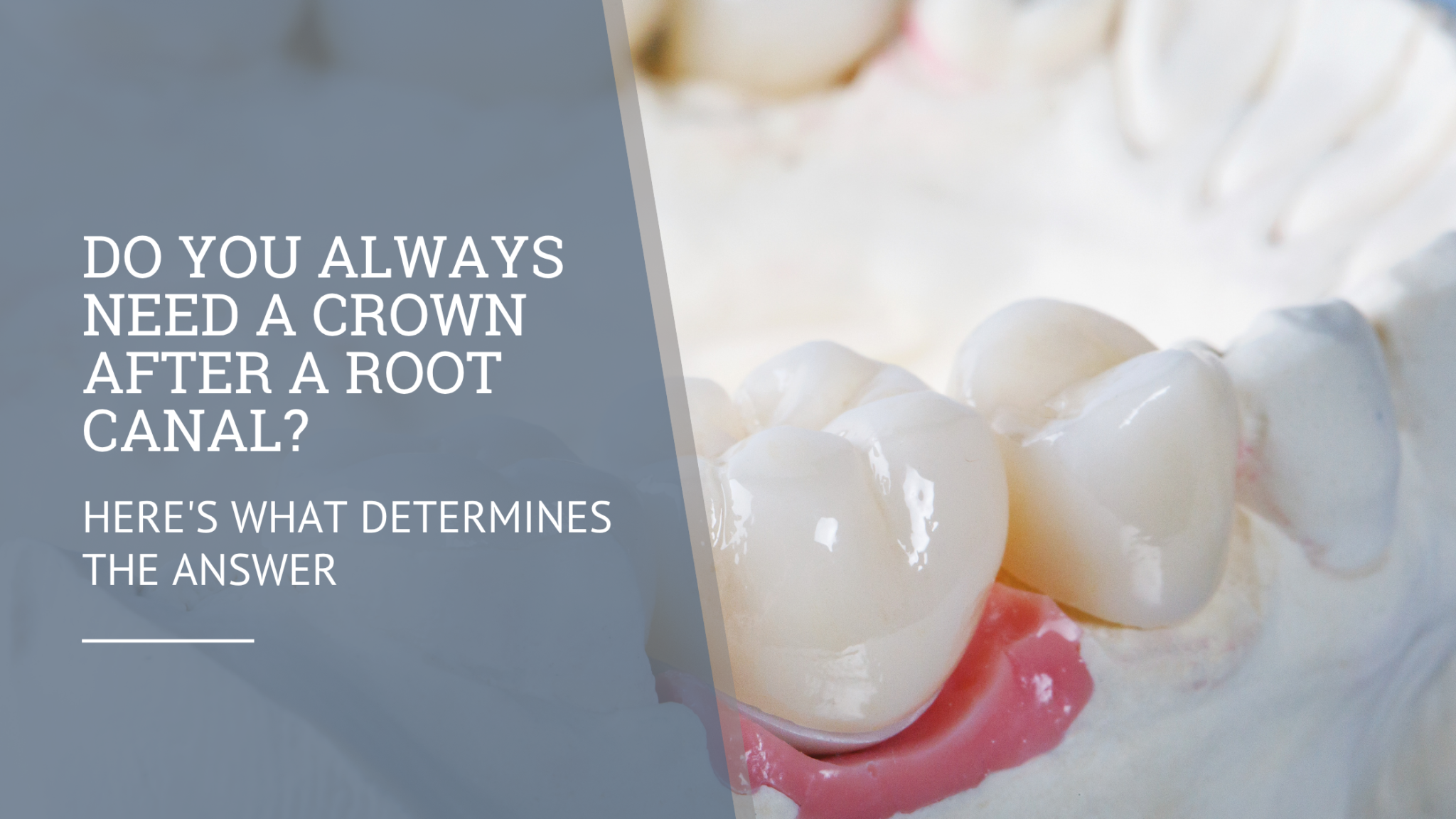
A dental crown acts like a protective cap that covers the entire visible portion of the tooth.
A root canal tooth crown helps:
- Restore chewing strength
- Protect weakened tooth structure
- Prevent cracks from spreading
- Reduce the chance of future fractures
- Restore the tooth’s natural appearance
For many back teeth, placing a crown is the best way to help the tooth last for many years.
Which Teeth Usually Need a Crown?
Back teeth almost always benefit from a crown because they absorb the greatest chewing forces.
These include:
- Molars
- Premolars
Every time you chew, these teeth handle significant pressure. Without added protection, they are more likely to crack over time.
Front teeth often experience much less force. If there is enough healthy tooth remaining, some front teeth can be restored with a filling instead of a crown.
Your dentist will evaluate the condition of the tooth and recommend the best option.
When Might You Not Need a Crown?
Not every root canal requires a crown.
You may not need one if:
- The tooth is located in the front of your mouth.
- Very little tooth structure was lost.
- The tooth is not cracked.
- A filling can fully restore the tooth.
Even so, every situation is unique. Your dentist will carefully examine the tooth before making a recommendation.
What Happens If You Skip the Crown?
Some patients delay getting a crown because the tooth feels fine after treatment.
Unfortunately, symptoms are not always a good indicator of strength.
Without proper protection, the tooth may:
- Crack while chewing
- Break unexpectedly
- Require more extensive treatment
- Become impossible to save
In some cases, a severe fracture may lead to tooth extraction.
Getting the recommended restoration helps reduce these risks and protects the investment you’ve already made in saving your natural tooth.
How Soon Should a Crown Be Placed?
In many cases, a crown should be placed within a few weeks after the root canal is completed.
Waiting too long may increase the chance of the tooth cracking before it is fully protected.
Your general dentist will usually complete the permanent restoration after your endodontic treatment. Following their recommended timeline is one of the best ways to ensure long-term success.
Does Every Tooth Last Forever After a Root Canal?
Root canal treatment has a very high success rate.
With good oral hygiene, regular dental visits, and the proper restoration, many treated teeth continue functioning for decades.
The combination of excellent endodontic treatment and a properly fitted crown often provides the best long-term outcome for heavily restored teeth.
Frequently Asked Questions
Is a crown always needed after a root canal?
No. Some front teeth can often be restored with a filling instead of a crown. Back teeth are much more likely to require one because they experience greater chewing pressure.
Can I wait several months before getting my crown?
Delaying a crown increases the risk that the tooth may crack or fracture before it is fully protected. It’s best to follow your dentist’s recommended timeline.
Does getting a crown hurt?
Most patients experience very little discomfort during crown preparation. Your dentist will numb the area to keep you comfortable throughout the procedure.
Can a tooth break after a root canal?
Yes. A tooth can still fracture if it is not properly restored. This is one reason crowns are commonly recommended for weakened back teeth.
Protect Your Smile for Years to Come
A root canal saves an infected tooth, but restoring that tooth properly is just as important.
If you’ve recently had root canal treatment or have questions about whether you need a crown after a root canal, the experienced team at Eastern Idaho Endodontics is here to help. We work closely with your general dentist to ensure your treatment provides the strongest possible foundation for long-term oral health.
If you’ve been referred for root canal treatment or have questions about your options, contact Eastern Idaho Endodontics today to schedule your evaluation.