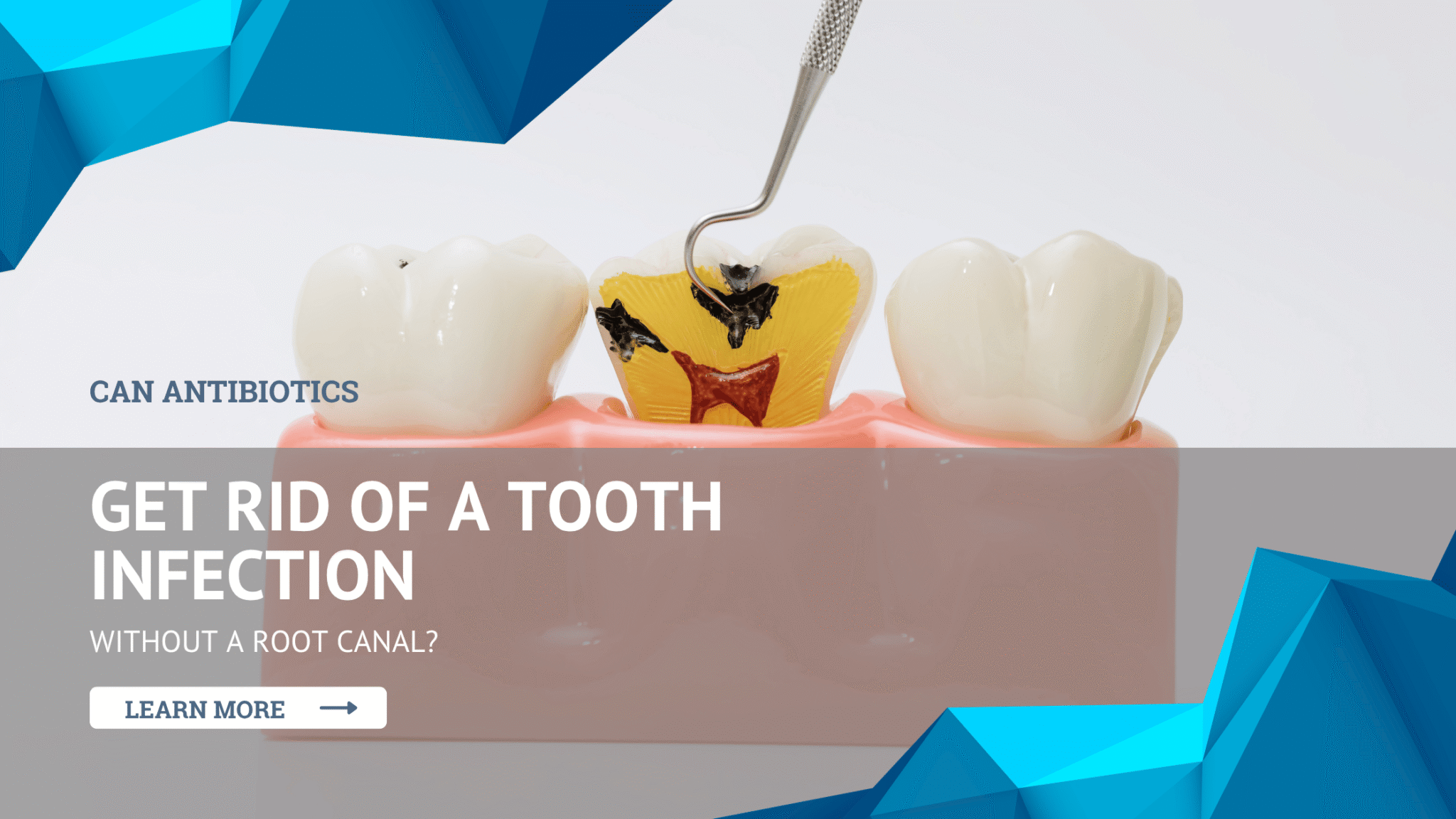
Can Antibiotics Get Rid of a Tooth Infection Without a Root Canal?
If you have an infected tooth, taking antibiotics may seem like the easiest solution. After all, antibiotics treat many bacterial infections throughout the body.
So, can antibiotics get rid of a tooth infection without a root canal?
In many cases, no. Antibiotics may be useful for certain dental infections, especially when there are signs that an infection is spreading. However, antibiotics alone usually cannot eliminate the source of an infection located inside the root canal system.
If the pulp inside your tooth is infected or no longer vital, you may still need root canal treatment to remove the infected tissue and bacteria.
Why Don’t Antibiotics Always Cure a Tooth Infection?
The answer has a lot to do with where the infection is located.
Inside each tooth is a space containing dental pulp. This tissue includes nerves, blood vessels, and connective tissue.
Deep decay, cracks, trauma, or other damage can allow bacteria to reach the pulp. If the pulp becomes infected and loses its blood supply, antibiotics delivered through your bloodstream may not effectively eliminate bacteria inside that tissue.
As a result, medication may help with certain aspects of an infection without removing its source.
That’s why treating the tooth itself is often necessary.
When Are Antibiotics Used for a Tooth Infection?
Antibiotics can still play an important role in dental care.
Your dentist or endodontist may consider antibiotics when there are signs that an infection has spread beyond the immediate area around the tooth or when systemic symptoms are present.
For example, your provider may consider factors such as:
- Fever
- Malaise or feeling generally unwell
- Spreading swelling
- The location and severity of the infection
- Your overall health
- Your immune system
- Whether immediate dental treatment is available
However, the decision to prescribe antibiotics should be made by a dental or medical professional.
Antibiotics are not automatically necessary for every toothache or root canal infection.
Can Antibiotics Make a Tooth Infection Feel Better?
Sometimes.
If antibiotics are appropriate for your condition, swelling or other symptoms related to spreading infection may improve.
That improvement can create an important misunderstanding.
Feeling better doesn’t necessarily mean the source of the infection inside the tooth is gone.
If infected or non-vital tissue remains inside the root canal system, symptoms can return.
Therefore, don’t assume that a tooth has healed simply because medication made you feel better.
Can a Tooth Infection Come Back After Antibiotics?
Yes.
A tooth infection can return if the underlying source hasn’t been treated.
Imagine that bacteria are living inside an infected root canal system. Medication may help control infection in surrounding tissues in appropriate cases, but the damaged tissue and bacteria inside the tooth may remain.
Once the medication is finished, symptoms may return.
You might notice:
- Tooth pain
- Pain when biting
- Gum swelling
- Facial swelling
- A bump on the gums
- Drainage
- A bad taste in your mouth
Sometimes symptoms return quickly. In other cases, the tooth may remain relatively quiet for a period of time.
Either way, an evaluation is important.
Do You Always Need a Root Canal for a Tooth Infection?
Not every dental infection automatically requires a root canal.
Treatment depends on the source of the infection and whether the tooth can be saved.
For example, some infections involve the gums or other tissues rather than the dental pulp.
However, if the pulp inside a restorable tooth is infected or no longer vital, root canal treatment may be recommended.
An endodontist can determine where the problem is coming from and whether root canal treatment is appropriate.
What Does a Root Canal Do That Antibiotics Can’t?
Root canal treatment addresses the infection at its source inside the tooth.
During treatment, the endodontist accesses the root canal system and removes damaged or infected pulp tissue.
Next, the canals are carefully cleaned, shaped, disinfected, and sealed.
This process is designed to reduce bacteria within the root canal system and prevent reinfection.
Most importantly, it can allow you to keep the natural tooth rather than remove it.
Antibiotics and root canal treatment therefore serve different purposes.
When antibiotics are necessary, they may be used alongside dental treatment rather than as a replacement for it.
Can I Just Keep Taking Antibiotics Instead of Getting a Root Canal?
Repeatedly taking antibiotics isn’t a substitute for treating the source of an infected tooth.
In addition, antibiotics should only be used when clinically appropriate.
Unnecessary antibiotic use contributes to antibiotic resistance. That means bacteria can become more difficult to treat with medications in the future.
Antibiotics can also cause side effects.
For these reasons, your dental provider will determine whether antibiotics are actually needed rather than prescribing them automatically for every tooth infection.
What If My Tooth Stops Hurting After Antibiotics?
Don’t assume the tooth is healthy simply because the pain disappears.
A reduction in symptoms can be encouraging, but it doesn’t necessarily tell us what is happening inside the tooth.
Additionally, severely damaged nerve tissue can eventually stop producing the same pain signals.
That means a tooth can sometimes become less painful even though the pulp is still infected or no longer vital.
If you’ve already been told you need a root canal, don’t cancel treatment simply because the tooth feels better.
Talk with your dentist or endodontist first.
Can a Tooth Infection Go Away on Its Own?
An infection inside a non-vital root canal system should not be expected to resolve on its own.
Symptoms can change. Pain may come and go. Swelling may decrease temporarily.
However, those changes don’t necessarily mean the source has disappeared.
If you suspect an infected tooth, the safest approach is to have it evaluated.
Your provider can determine whether the pulp is healthy, inflamed, infected, or no longer vital.
What Happens If You Don’t Treat an Infected Tooth?
An untreated dental infection may progress.
Depending on the tooth and the type of infection, possible complications can include:
- Increasing pain
- Pain when chewing
- Gum swelling
- Facial swelling
- A dental abscess
- Drainage
- Damage to tissues around the root
- Difficulty saving the natural tooth
In more serious cases, dental infections can spread beyond the immediate area of the tooth.
That’s why significant swelling and systemic symptoms shouldn’t be ignored.
When Is a Tooth Infection an Emergency?
Some dental problems need prompt attention.
Contact a dental professional if you develop significant or increasing swelling, severe tooth pain, drainage, or other symptoms of infection.
Fever or feeling generally ill along with a dental infection can also indicate that the infection requires prompt attention.
More serious symptoms require an even faster response.
If facial or neck swelling makes it difficult to breathe or swallow, seek emergency medical care.
Don’t wait for an infection to become severe before asking for help.
Why See an Endodontist for an Infected Tooth?
Endodontists specialize in diagnosing and treating problems involving the dental pulp and root canal system.
That includes determining whether tooth pain or infection actually requires a root canal.
An endodontist may evaluate:
- Your symptoms
- Your dental history
- Dental X-rays
- The tooth’s response to temperature testing
- Tenderness when biting or tapping
- Gum and surrounding tissue
- Cracks or fractures
- Previous dental treatment
The goal is to identify the source of the problem before recommending treatment.
If the tooth can be saved with root canal treatment, an endodontist can then treat the infection while preserving the natural tooth whenever possible.
Frequently Asked Questions About Antibiotics and Tooth Infections
Can amoxicillin get rid of a tooth infection without a root canal?
Amoxicillin may be prescribed for certain dental infections when clinically appropriate. However, antibiotics alone generally don’t eliminate the source of an infection inside a non-vital root canal system. Your dental provider must determine whether you also need root canal treatment or another procedure.
How long does it take antibiotics to work on a tooth infection?
The response varies based on the infection, medication, and patient. More importantly, improvement after starting antibiotics doesn’t necessarily mean the underlying dental problem has been resolved.
Can antibiotics prevent me from needing a root canal?
Antibiotics don’t restore severely damaged or infected pulp. If diagnostic testing shows that the pulp is irreversibly damaged or infected and the tooth can be saved, root canal treatment may still be necessary.
Why won’t my dentist give me antibiotics for tooth pain?
Antibiotics aren’t appropriate for every type of tooth pain. Many dental problems are better treated by addressing the tooth itself rather than prescribing an antibiotic.
Will a tooth infection return after antibiotics?
It can. If the source of the infection remains inside the tooth, symptoms may return after medication is completed.
Can I get a root canal while I have an infection?
Root canal treatment is commonly used to treat teeth with infected or non-vital pulp. Your endodontist will evaluate your specific situation and determine the appropriate treatment plan.
Do I need antibiotics before a root canal?
Not necessarily. Many patients undergoing root canal treatment do not need antibiotics. Your provider will determine whether they are appropriate based on your symptoms, health history, and the nature of the infection.
Treat the Source, Not Just the Symptoms
So, can antibiotics get rid of a tooth infection without a root canal?
Sometimes antibiotics are an important part of managing a dental infection. However, when the source of infection is inside a non-vital root canal system, medication alone generally isn’t a substitute for treating the tooth.
That’s an important distinction.
The goal isn’t simply to make the tooth feel better for a few days. It’s to diagnose the source of the problem and treat it appropriately.
Eastern Idaho Endodontics specializes in diagnosing tooth pain, dental infections, and conditions affecting the inside of the tooth.
When root canal treatment is necessary, our goal is to address the infection and help save your natural tooth whenever possible.
If you have tooth pain, swelling, a suspected infection, or you’ve been told you may need a root canal, don’t rely on leftover antibiotics or wait for the problem to disappear.
Schedule an evaluation with Eastern Idaho Endodontics to find out what’s causing the problem and what treatment your tooth actually needs.