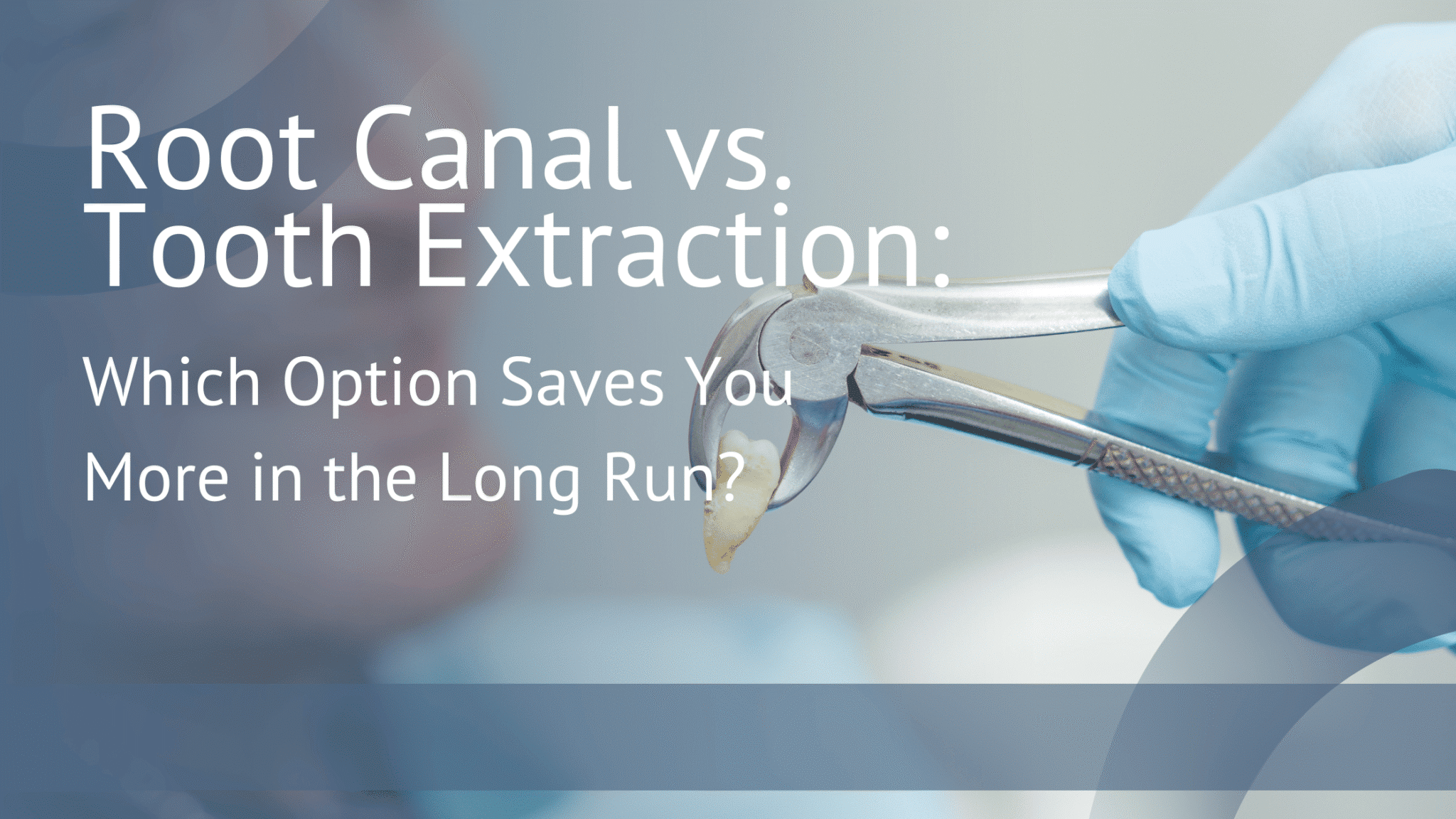
When you’re dealing with severe tooth pain or infection, it’s natural to wonder whether saving the tooth is worth it. Many patients ask the same question: Should I get a root canal or have the tooth extracted?
While every case is unique, preserving your natural tooth is often the best long-term solution. Understanding the differences between root canal vs extraction can help you make an informed decision about your oral health.
What’s the Difference Between a Root Canal and an Extraction?
Both treatments address damaged or infected teeth, but they do so in very different ways.
A root canal:
- Removes infection from inside the tooth.
- Preserves your natural tooth structure.
- Eliminates pain.
- Allows you to continue chewing normally.
A tooth extraction:
- Removes the entire tooth.
- Eliminates the infection source.
- Leaves a gap in your smile.
- May require replacement options later.
The right treatment depends on the condition of the tooth, but in many cases, dentists and endodontists will recommend saving the tooth whenever possible.
Why Is Saving Your Natural Tooth Important?
One of the biggest advantages of root canal treatment is that it allows you to save your tooth.
Your natural teeth are designed to:
- Maintain proper chewing function.
- Keep neighboring teeth in place.
- Support healthy bone levels.
- Preserve your bite and smile.
Once a tooth is removed, the surrounding teeth can gradually shift, potentially leading to additional dental problems.
What Are the Benefits of a Root Canal?
Modern root canal treatment is far more comfortable and effective than many people realize.
Some of the most important root canal benefits include:
- Preserving your natural tooth
- Relieving pain and infection
- Maintaining your natural bite
- Preventing neighboring teeth from shifting
- Avoiding bone loss
- Often requiring less long-term treatment
With today’s technology and anesthesia, most patients compare the experience to getting a routine filling.
What Happens After a Tooth Extraction?
Many people assume that extraction is the simpler option, but removing a tooth is often only the first step.
After an extraction, patients may eventually need:
- A dental implant
- A bridge
- A partial denture
- Additional procedures to restore chewing function
Without replacing the missing tooth, nearby teeth can drift into the empty space over time.
Which Option Costs Less in the Long Run?
At first glance, an extraction may seem less expensive. However, the long-term costs can tell a different story.
A root canal typically addresses the problem while preserving your natural tooth. An extraction may require future replacement treatments, which can increase costs over time.
Factors that affect the total cost include:
- The location of the tooth
- The severity of the infection
- Insurance coverage
- Whether replacement teeth are needed
In many cases, preserving your natural tooth is the most cost-effective option over the long term.
Are Root Canals Successful?
Yes. Root canal treatment has an excellent success rate and allows millions of people to keep their natural teeth every year.
With proper restoration and regular dental care, a treated tooth can often last for decades.
The key is seeking treatment before the infection becomes too severe.
When Might an Extraction Be Necessary?
Although saving the tooth is usually preferred, there are situations where extraction may be the better option.
Extraction may be recommended if:
- The tooth is severely fractured.
- There is extensive bone loss.
- The tooth cannot be restored.
- Previous treatments have failed.
- The damage extends below the gumline.
Your dentist or endodontist will evaluate your specific situation and discuss the most appropriate treatment.
How Does an Endodontist Help?
Endodontists specialize in diagnosing tooth pain and treating the inside of the tooth.
Their advanced training allows them to:
- Perform root canals
- Treat complex infections
- Evaluate cracked teeth
- Perform apicoectomies
- Help patients preserve their natural teeth
If your dentist refers you to an endodontist, it is because they believe your tooth may still be saved.
Frequently Asked Questions
Is a root canal better than an extraction?
In many cases, yes. Saving your natural tooth often provides better long-term function and helps prevent future dental problems.
Does extraction permanently solve the problem?
It removes the infected tooth, but patients may still need additional treatment to replace the missing tooth and restore their bite.
Is a root canal painful?
Modern root canals are designed to relieve pain, not cause it. Most patients report that treatment feels similar to having a cavity filled.
Can a root canal last forever?
With proper care and restoration, many root canal-treated teeth last for decades.
Choose the Option That Protects Your Smile
When comparing root canal vs extraction, preserving your natural tooth is often the healthiest choice for your long-term oral health.
At Eastern Idaho Endodontics, our goal is simple: help patients eliminate pain, treat infection, and save their natural teeth whenever possible. If you’re facing a difficult decision about treatment, our experienced team can help you understand your options and determine the best path forward.