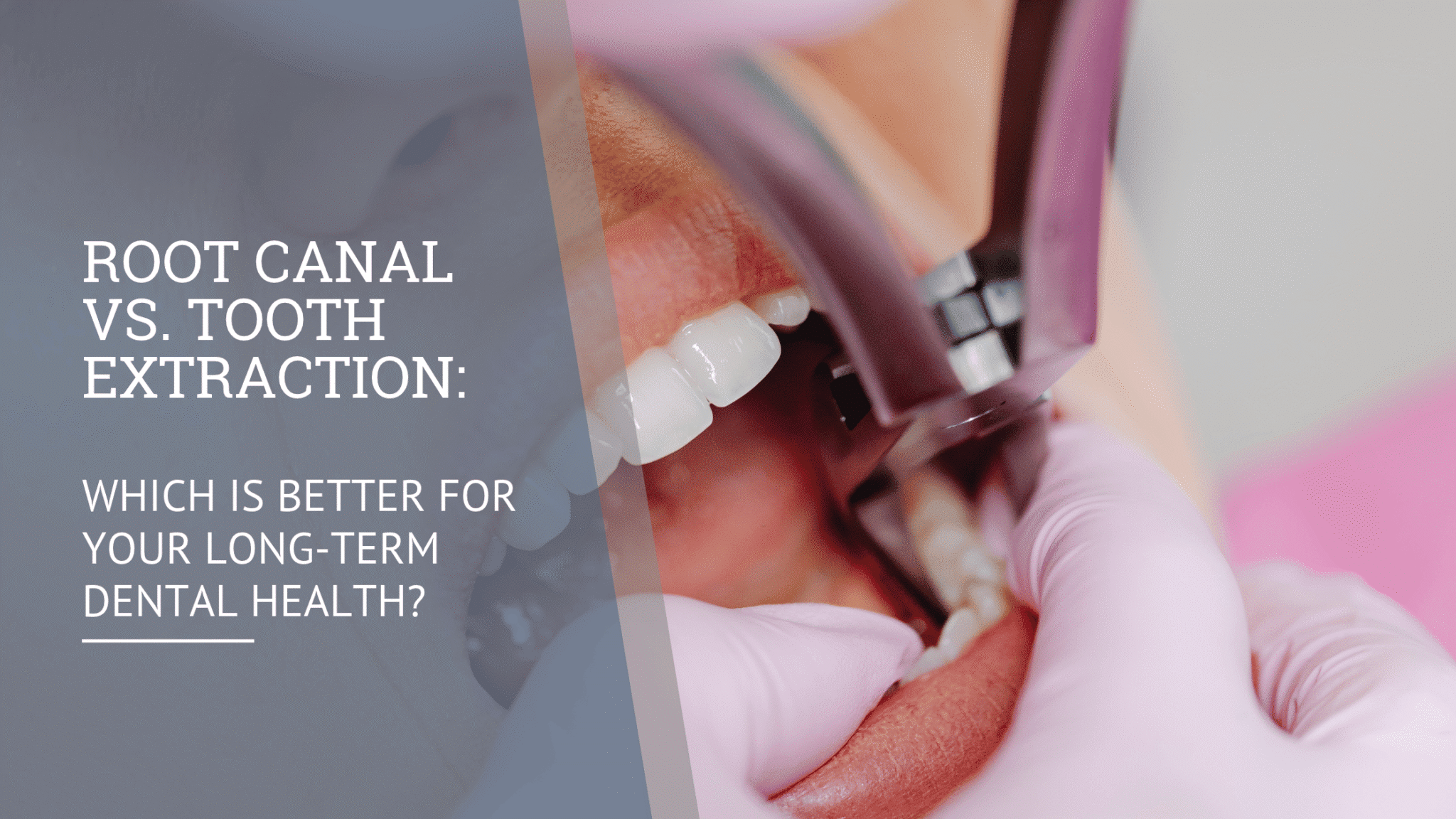
When a tooth becomes badly damaged or infected, you may face an important decision: root canal vs. tooth extraction. Both treatments can address serious dental problems, but they have different effects on your long-term oral health.
A root canal may allow you to keep your natural tooth. An extraction removes the tooth and may require additional treatment to replace it.
At Eastern Idaho Endodontics, we believe patients deserve to understand their options before making a decision. Our goal is to help you preserve your natural teeth whenever possible while protecting your overall dental health.
Root Canal vs. Tooth Extraction: What’s the Difference?
The main difference between these treatments is whether your natural tooth stays in place.
A root canal treats infection or inflammation inside a tooth. During the procedure, an endodontist removes the affected pulp, cleans the root canals, and seals the space. The tooth can then be restored to help protect it.
A tooth extraction removes the entire tooth from its socket. Extraction may be necessary when a tooth is too damaged to repair or cannot be treated successfully.
Both procedures have an important role in dental care. However, keeping a healthy, functional natural tooth is generally preferred when treatment is possible.
5 Reasons Saving Your Natural Tooth May Be Better
Your natural teeth are designed to work together. Each tooth plays a role in chewing, speaking, and maintaining a balanced bite.
When a damaged tooth can be saved, root canal treatment may offer several long-term advantages.
1. Maintain Your Natural Bite
Your teeth work together to distribute pressure when you chew.
When a tooth is removed, nearby teeth may gradually shift into the empty space. This movement can affect how your upper and lower teeth fit together.
Saving your natural tooth helps maintain its position and supports a balanced bite.
2. Preserve Your Natural Chewing Ability
Natural teeth provide stability and allow you to chew a wide variety of foods.
After a successful root canal and appropriate restoration, many patients can return to normal chewing.
If a tooth is extracted, chewing may become more difficult until the missing tooth is replaced.
3. Help Maintain Jawbone Support
The roots of your natural teeth help maintain the surrounding jawbone through everyday chewing forces.
After an extraction, the bone around the missing tooth may gradually shrink because it no longer receives the same stimulation.
Dental implants can help support the surrounding bone, but they require additional treatment.
Preserving your natural tooth also preserves its root structure and connection to the surrounding tissues.
4. Avoid Additional Tooth Replacement Procedures
A root canal treats the inside of your existing tooth.
After treatment, your dentist may recommend a permanent filling or crown to restore its strength and function.
Following an extraction, you may need a dental implant, bridge, or partial denture to replace the missing tooth.
These treatments can be effective. However, they may involve additional appointments, healing time, and costs.
5. Keep Your Natural Smile
Your natural teeth contribute to the appearance and function of your smile.
When a tooth can be saved, root canal treatment allows you to maintain your existing tooth rather than replacing it.
For many patients, this is an important benefit when considering their long-term dental health.
When Is a Root Canal the Better Option?
Root canal treatment may be recommended when the pulp inside a tooth becomes infected or irreversibly inflamed.
Common causes include deep decay, dental injuries, and cracks that allow bacteria to reach the inner tissues.
You may notice symptoms such as:
-
Persistent or recurring tooth pain.
-
Lingering sensitivity to hot or cold.
-
Discomfort when chewing or biting.
-
Swelling or tenderness near the tooth.
-
A tooth that becomes darker in color.
However, some infected teeth cause few noticeable symptoms.
An endodontist can evaluate the tooth and determine whether root canal treatment is appropriate.
At Eastern Idaho Endodontics, we use specialized diagnostic techniques and modern technology to help identify the source of tooth pain and evaluate treatment options.
If your tooth can be predictably treated and restored, saving it may provide important long-term benefits.
When Is Tooth Extraction Necessary?
Although preserving natural teeth is often the preferred approach, extraction is sometimes the healthiest option.
A tooth may need to be removed when:
-
A crack extends too far below the gumline.
-
The tooth has extensive decay and cannot be restored.
-
There is not enough healthy tooth structure remaining.
-
Severe periodontal disease has damaged the supporting tissues.
-
The tooth has a poor long-term prognosis despite available treatment.
In these situations, root canal treatment may not provide a predictable result.
Your dentist or endodontist can explain the findings and help you understand why extraction may be recommended.
The goal is not simply to keep a tooth at any cost. It is to choose treatment that supports your long-term oral health.
Is a Root Canal More Painful Than an Extraction?
Many patients worry about discomfort when comparing root canal treatment and tooth extraction.
Fortunately, modern dental techniques and local anesthesia help make both procedures more comfortable.
During a root canal, the area is numbed before treatment begins. The procedure is designed to remove inflamed or infected tissue that may be causing pain.
Afterward, some tenderness is normal as the surrounding tissues heal.
An extraction also involves anesthesia. However, recovery includes healing of the socket where the tooth was removed.
The amount of discomfort and recovery time varies depending on the condition of the tooth, the complexity of treatment, and your individual health.
For more information about what to expect, read our guide to root canal recovery and aftercare.
Root Canal vs. Extraction: Which Costs More?
Cost is another important consideration when choosing between a root canal and extraction.
An extraction may have a lower initial cost than root canal treatment. However, the total expense can change if you need to replace the missing tooth.
For example, tooth replacement may involve:
-
Dental implant placement.
-
A crown or bridge.
-
Additional imaging or procedures.
-
Bone grafting when necessary.
-
Follow-up appointments.
Root canal treatment also has associated costs, including the procedure itself and any permanent restoration needed afterward.
The final expense depends on your tooth, treatment complexity, insurance coverage, and restoration needs.
Therefore, it is helpful to compare the total cost of treatment rather than only the initial procedure.
You can learn more in our article about the cost of root canal treatment.
What Happens If You Extract a Tooth and Don’t Replace It?
Not every extracted tooth must be replaced. However, leaving a gap can sometimes create problems over time.
Depending on the location of the missing tooth, nearby teeth may shift or tilt toward the open space.
The opposing tooth may also move because it no longer contacts another tooth during chewing.
Additionally, the jawbone around the extraction site may gradually lose volume.
These changes can affect your bite and may complicate future tooth replacement.
Your dentist can explain whether replacing a missing tooth is recommended for your situation.
Can a Root Canal Save a Severely Damaged Tooth?
Sometimes, yes.
Even when a tooth has significant damage, root canal treatment may still be an option if enough healthy tooth structure remains.
However, the condition of the roots, surrounding bone, and remaining tooth structure all affect the treatment outlook.
For example, a tooth with infected pulp may respond well to root canal treatment. In contrast, a tooth with a deep vertical root fracture may not be restorable.
This is why an accurate diagnosis matters.
An endodontist can assess the internal condition of the tooth and help determine whether saving it is a realistic option.
If you are experiencing pain when chewing, our article about 5 reasons your tooth hurts when chewing explains several possible causes.
How Long Does a Root Canal-Treated Tooth Last?
A properly treated and restored tooth can remain functional for many years. Some root canal-treated teeth last a lifetime.
However, long-term success depends on several factors.
These include:
-
The condition of the tooth before treatment.
-
The complexity of the root canal system.
-
The quality and timing of the permanent restoration.
-
Your oral hygiene habits.
-
Regular dental examinations.
-
Whether the tooth experiences excessive biting pressure.
A crown or other appropriate restoration may be especially important for back teeth that experience significant chewing forces.
Although no dental procedure can guarantee lifelong success, proper treatment and ongoing care can improve the chances of keeping your natural tooth.
Frequently Asked Questions About Root Canal vs. Extraction
Is it better to get a root canal or pull the tooth?
If a tooth can be successfully treated and restored, a root canal is often preferred because it preserves your natural tooth. However, extraction may be necessary when the tooth cannot be saved predictably.
Is pulling a tooth easier than getting a root canal?
An extraction may be simpler in some situations, but it also creates a space that may need to be restored. A root canal preserves the existing tooth and may avoid the need for tooth replacement. The best choice depends on your dental condition.
Can an infected tooth be saved instead of extracted?
Many infected teeth can be saved with root canal treatment. However, the tooth must have enough healthy structure and support to remain functional after treatment.
What happens if I choose extraction instead of a root canal?
The tooth will be removed, and the extraction site will need time to heal. Depending on which tooth is removed, your dentist may recommend an implant, bridge, or another replacement option.
Should I see an endodontist before having a tooth extracted?
If you have been told a tooth may need extraction because of infection or damage to its internal tissues, an endodontic evaluation may help determine whether saving it is possible. However, not every tooth can or should be preserved.
Specialized Root Canal Care in Eastern Idaho and Western Wyoming
Choosing between root canal treatment and tooth extraction can feel like a difficult decision. However, understanding your options can make the process easier.
At Eastern Idaho Endodontics, our team specializes in diagnosing tooth pain and treating conditions affecting the inside of your teeth.
We focus on providing precise, comfortable care while helping patients preserve their natural teeth whenever possible.
Our practice serves patients at seven locations:
-
Idaho Falls, Idaho
-
Pocatello, Idaho
-
Rexburg, Idaho
-
Burley, Idaho
-
Hailey, Idaho
-
Jackson, Wyoming
-
Pinedale, Wyoming
Whether your general dentist has recommended root canal treatment or you are considering extraction, our team can help evaluate whether your tooth may be saved.
Before You Choose Extraction, Understand Your Options
A damaged or infected tooth does not always need to be removed.
In many cases, root canal treatment offers a way to eliminate infection, relieve discomfort, and preserve your natural tooth.
However, every tooth is different. The right decision depends on its condition, available treatment options, and long-term prognosis.
At Eastern Idaho Endodontics, we are committed to helping patients make informed decisions about their dental health.
If you have been told that a tooth may need to be extracted, contact Eastern Idaho Endodontics to learn whether an endodontic evaluation may be appropriate.
Our team is here to help you explore your options and protect your natural smile whenever possible.