If you’ve been told you need a root canal, you might be wondering what your options are—and whether newer technology makes a difference.
Today, patients often hear about laser-assisted root canal therapy as a more advanced alternative to traditional methods. But what does that actually mean for your experience, your comfort, and your long-term results?
At Eastern Idaho Endodontics, we believe in helping you understand your options so you can feel confident in your care. Let’s break down traditional vs. laser-assisted root canal therapy and what sets them apart.
What Is Traditional Root Canal Therapy?
Traditional root canal therapy has been used successfully for decades to treat infected or damaged teeth.
The process typically involves:
- Removing infected pulp from inside the tooth
- Cleaning and shaping the root canals using specialized instruments
- Disinfecting the area with irrigation solutions
- Sealing the canals to prevent reinfection
When performed properly, traditional root canals are highly effective and can save your natural tooth for many years.
What Is Laser-Assisted Root Canal Therapy?
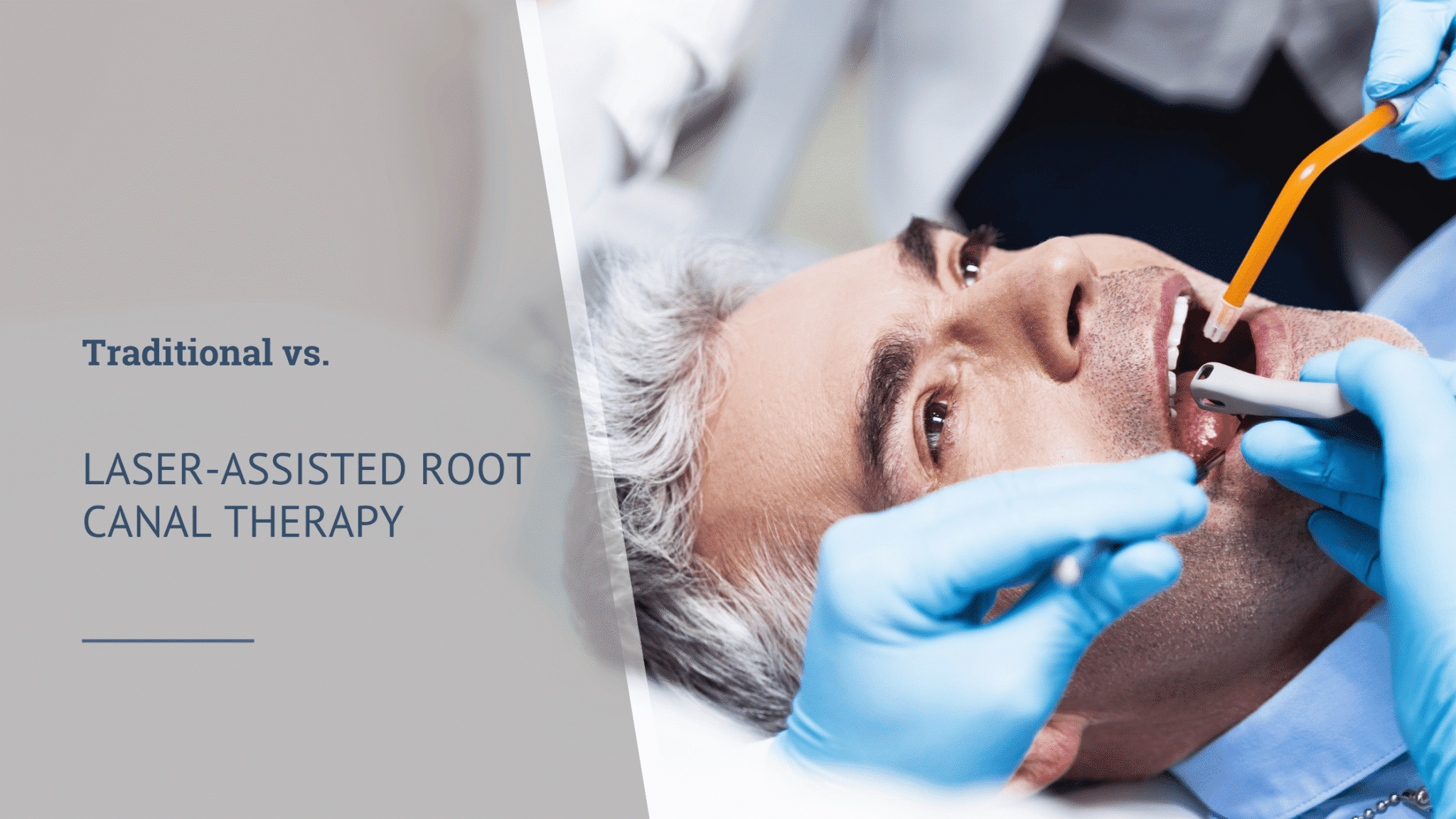
Laser-assisted root canal therapy builds on traditional methods by incorporating advanced laser technology to enhance the cleaning and disinfection process.
Instead of relying solely on manual instruments and irrigation, a dental laser is used to:
- Penetrate deeper into the root canal system
- Eliminate bacteria more effectively
- Reach microscopic areas that may be difficult to access
This added step can improve the overall effectiveness of the procedure—especially in more complex cases.
Key Differences: Traditional vs. Laser-Assisted Root Canal Therapy
1. Cleaning and Disinfection
Traditional:
Relies on mechanical instruments and liquid solutions to clean the canals.
Laser-Assisted:
Uses laser energy to reach deeper and disinfect more thoroughly.
Why it matters: More thorough cleaning may reduce the risk of reinfection.
2. Precision
Traditional:
Highly effective but limited to the physical reach of instruments.
Laser-Assisted:
Laser technology allows for enhanced precision in targeting bacteria.
Why it matters: Improved precision can lead to better long-term outcomes.
3. Comfort
Traditional:
Modern techniques already make this procedure comfortable for most patients.
Laser-Assisted:
Often associated with reduced irritation to surrounding tissues.
Why it matters: Patients may experience a smoother recovery.
4. Effectiveness in Complex Cases
Traditional:
Works well for most standard root canal treatments.
Laser-Assisted:
Can be especially beneficial in teeth with complex or hard-to-reach canal systems.
Why it matters: Advanced technology helps address more challenging anatomy.
5. Recovery Time
Traditional:
Recovery is typically quick, with mild soreness for a few days.
Laser-Assisted:
May result in slightly faster healing due to less tissue disruption.
Why it matters: Less downtime for your daily routine.
Which Option Is Right for You?
The best approach depends on your specific situation.
Factors that influence treatment include:
- The complexity of your tooth’s anatomy
- The extent of infection
- Whether this is a first-time treatment or retreatment
- Your overall dental health
In many cases, a combination of traditional techniques and advanced technology delivers the best results.
The Role of Experience and Technology
While technology like lasers can enhance treatment, the experience of your provider is just as important.
At Eastern Idaho Endodontics, we combine:
- Advanced diagnostic tools
- Precision-driven techniques
- Patient-focused care
This ensures every root canal—whether traditional or laser-assisted—is performed with the highest level of accuracy and comfort.
Benefits of Choosing Advanced Endodontic Care
Regardless of the method used, the goal remains the same: to eliminate infection and preserve your natural tooth.
With modern techniques, patients can expect:
- A more comfortable experience
- Efficient treatment
- Reliable, long-term results
Modern Options, Better Outcomes
Root canal therapy has come a long way. While traditional methods remain highly effective, advancements like laser-assisted technology offer additional benefits in certain cases.
Understanding the difference between traditional vs. laser-assisted root canal therapy can help you feel more informed and confident in your treatment decision.
If you’ve been told you need a root canal, exploring your options with a specialist is the best next step.
FAQs About Root Canal Therapy
Is laser-assisted root canal therapy better than traditional?
It depends on the case. Laser technology can enhance cleaning, especially in complex situations.
Is one more painful than the other?
Both methods are designed to be comfortable with modern anesthesia.
Does laser treatment replace traditional methods?
No. It’s typically used alongside traditional techniques to improve results.
Is laser-assisted therapy available for all patients?
Most patients can benefit, but suitability depends on the specific tooth and condition.
How long does a root canal take?
Most treatments can be completed in one visit, depending on complexity.